
How to Taste Wine Like a Pro (And Why You Shouldn’t on Vacation)

Most people think learning how to taste wine requires a sommelier pin, a hundred-point scale, and a vocabulary test. The truth is a lot simpler, and a lot more fun.
I have visited 400+ vineyards across six countries. I have sat through countless professional tastings with producers in Italy, Spain, France, and Mexico. And the best wine moments of my life had nothing to do with a scoring grid.
This guide is for two kinds of readers. The curious drinker who wants to know how to judge wine the way the professionals do. And the traveler who wants to enjoy a tasting without feeling like they are taking an exam. I will show you both worlds, side by side. Then I will give you the simple four-question scorecard my guests use on VIP Winery Vacations. It has nothing to do with numbers and everything to do with the moment.
How to Taste Wine Like a Sommelier: The Four-Step Grid
The wine industry uses a structured grid for formal evaluation. The Court of Master Sommeliers deductive tasting method is the gold standard. It breaks every wine down into four steps.
Appearance. The pro checks clarity first. Is the wine brilliant, clear, or hazy? Then color. A young red leans purple. An older red shifts toward brick or garnet. A white deepens from pale straw to gold as it ages. The pro also notes viscosity, the legs that run down the glass after a swirl.
Nose. This is where most of the work happens. The pro identifies aromas by category: fruit, floral, spice, herb, earth, or oak. They judge intensity and complexity. A simple wine smells like one or two things. A complex wine unfolds in layers, shifting between the first sniff and the tenth.
Palate. Now the pro confirms what the nose suggested. They note structure: acidity, tannin, alcohol, body. They check balance. Does one element dominate? They time the finish, which is how long the flavor lingers after you swallow. A 30-second finish signals quality. A 5-second finish does not.
The Verdict. The pro closes with a final assessment: quality level, aging potential, and typicity. Does the wine taste like what the label says it is?
That is deductive wine tasting in a nutshell. It is rigorous, disciplined, and repeatable. So where do the famous numbers come from?
Key Takeaway: Professionals taste wine in four steps. Appearance, nose, palate, verdict. They move from what they can see to what they can prove in the glass.
How Do Professionals Score Wine? The Wine Scoring System Explained
Once the grid is complete, the score arrives. Different corners of the wine world use different math.
Publications like Wine Spectator use the 100 point wine scale. On that scale, 90 to 94 is outstanding and 95 to 100 is a classic. Competition judges often work from a 20-point wine judging scorecard instead, with points assigned to appearance, aroma, taste, and overall quality.
Here is what matters for you as a drinker. Every wine scoring system was built to compare thousands of wines objectively, across vintages, regions, and price points. The score exists for buyers, critics, and competition medals. It was never designed for you.
So what happens when that system meets a traveler on vacation?
Key Takeaway: The 100 point wine scale and the 20-point judging scorecard exist to compare wines for commerce and competition, not to measure your enjoyment.
Where the Professional Scorecard Fails the Guest
Here is the problem. The professional grid was built for competition and commerce. It was never designed for a traveler standing in a barrel room in Piedmont with a glass of Barbera the winemaker just poured from the tank.
I have watched guests freeze up when they think they need to identify blackberry versus black cherry. I have seen people apologize for not knowing the right word for what they are tasting. That is the opposite of what wine should do.
Wine is hospitality. It is a story in a glass. The only wrong answer at a tasting is silence because someone is afraid of being judged. Knowing how to taste wine should open the moment up, not shut it down.
So what should you actually pay attention to when the pro grid is too much?
Key Takeaway: The professional grid intimidates the very people wine is meant to delight. If a scoring sheet makes you afraid to speak, it is measuring the wrong thing.
What Should a Casual Drinker Look For? The Enjoyment Scorecard
Years ago I made a simple wine tasting scorecard for our guests. It has four categories too, but they measure something entirely different. No points. No technical vocabulary. Just your honest experience.
1. The First Sip Feeling. Before you think. Before you analyze. What happens in that first half-second? Does the wine make you pause? Does it make you smile? Does it make you close your eyes? That gut reaction is worth more than any tasting note.
2. The Story Connection. Every wine has a story. The producer, the vineyard, the vintage, the weather that year. Does this wine make you curious about where it came from? Do you want to meet the person who made it? A wine that pulls you toward its origin is doing its job.
3. The Food Pull. Great wine wants food. Does this wine make you hungry? Does it make you think about what dish would sit next to it? I have seen guests light up when a Sagrantino from Montefalco instantly makes them crave wild boar ragu. That instinct is more reliable than a tasting note.
4. The Memory Mark. A week from now, will you remember this wine? Not the score. Not the name. The feeling. The place. The people you were with. The wines I remember most are not the highest rated. They are the ones tied to a moment that mattered.
That is the whole scorecard. Four questions. No math. No vocabulary test.
How does it stack up against the professional version?
Key Takeaway: A casual drinker needs four questions only. Did it stop me, does it have a story, does it call for food, and will I remember it next week.
The Two Scorecards Side by Side
Both scorecards are valid. They just serve different purposes.
| What the Pro Asks | What the Guest Asks |
|---|---|
| Clarity and color? | Did it make me pause? |
| Aroma intensity and complexity? | Am I curious about the story? |
| Structure, balance, finish? | Does it pull me toward food? |
| Overall quality score out of 100? | Will I remember this moment? |
The pro grid helps buyers, critics, and sommeliers make consistent decisions. The guest scorecard helps a traveler connect with a place, a producer, and a moment.
On a VIP Winery Vacations tour, we are firmly on the right side of that table. What does that look like in practice?
Key Takeaway: The pro asks what the wine is. The guest asks what the wine does. Both are valid, but only one belongs on your vacation.
Wine Tasting for Beginners on Vacation: You Are Not Here to Be a Wine Geek
When Jamie and I designed these trips, we made one thing clear from the start. Our tours are not technical seminars. We do not quiz you on grape varieties. We do not hand out tasting grids. We do not expect anyone to identify blackberry versus black currant.
What we do is open doors you cannot open on your own. We take you into private cellars where the winemaker pulls bottles from barrels that never see a retail shelf. We sit at family tables where the producer’s grandmother brings out plates of handmade pasta between pours. We walk vineyards at sunset with the people who planted the vines.
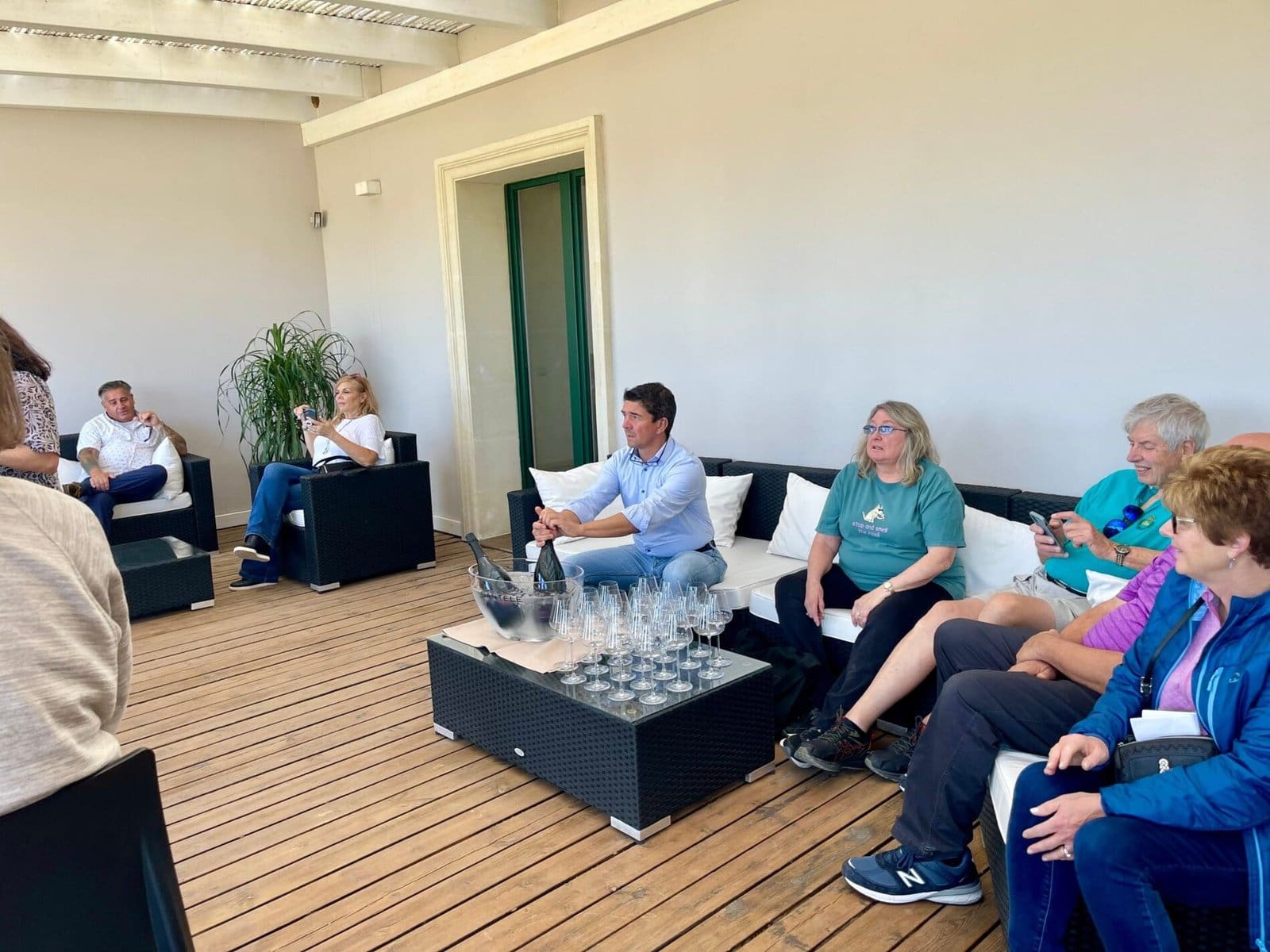
You taste the wine. You hear the story from the person who lived it. You eat food that was grown within walking distance. And you let the moment do what moments do. That is wine tasting for beginners done right, and honestly, it is how the locals drink too. It is the same spirit behind the unwritten rules of Italian food culture. Wine belongs at the table, with people.
Here is one practical tip I give every guest. When you travel with us, you might taste up to ten or twelve wines in a single sitting. That can get a little confusing, and nobody keeps all twelve straight by dinner. So take a quick photo of the labels you love as you go. Weeks later, you scroll through your phone and that one photo brings the moment straight back. It returns the cellar, the pour, and the person who made the wine.
So if you strip away the grids and the scores, what is left?
Key Takeaway: A great wine trip is built on access and hospitality, not homework. Private cellars, family tables, and real stories teach more than any tasting grid.
The Only Rule Worth Following
If I had to boil everything down to one rule, it would be this: trust your own palate. Professionals keep their grids because they need to compare thousands of wines objectively. You do not. You need to know what you like and why you like it.
Learn how to taste wine the professional way if it makes you curious. Then feel free to set it aside. The best wine in the world is the one in your glass right now, in a place that matters, with people you care about. Everything else is just notes on a page.
That is how to taste wine on vacation. Be present, be curious, and let the moment lead.
Where to experience it yourself: Explore our chef-hosted wine tours in Italy, Spain, Mexico, and France. Eight to fourteen guests. Private access. Zero tasting exams.
Frequently Asked Questions
How do professionals judge wine?
Professionals evaluate wine in four steps: appearance, nose, palate, and a final verdict. They assess clarity, color, aroma intensity, structure, balance, and finish, then assign a score for quality, typicity, and aging potential.
What is the 100 point wine scale?
The 100 point wine scale is the scoring system popularized by American wine publications. Wines scoring 90 to 94 are considered outstanding, and 95 to 100 are considered classics. Most professional reviews you see in shops use this scale.
Do I need a wine tasting scorecard as a beginner?
Not a technical one. A simple four-question scorecard works better for casual drinkers. Did the wine make you pause, does its story interest you, does it make you think of food, and will you remember it next week.
What is the easiest way to start tasting wine?
Start with one honest question: do I like this? Then get curious about why. Notice whether the wine is crisp or soft, light or heavy, fruity or earthy. Vocabulary can come later. Attention is the real skill.
Is there a wrong way to taste wine?
Only one. Staying silent because you are afraid of being judged. Your palate is yours. If a wine makes you smile, it is a good wine for you, whatever the score says.
Inspired to travel deeper?
Explore the private wine, food, and producer-led journeys behind the stories on VIP Winery Vacations.
View Piedmont


