








I’ve traveled all over Italy—north to south, city to countryside—eating the way Italians actually eat every day. Somewhere between an espresso at the bar and a glass of wine at lunch, I learned something essential: in Italy, food is rarely fast food, but it can be fast. And nowhere is that more evident than in the culture of the panino.
Outside of Italy, sandwiches are often treated as casual fuel—overstuffed, heavily sauced, pressed into submission. But in Italy, the panino is something else entirely. It’s an everyday ritual. It’s ingredient-driven, regional, deeply satisfying, and—most importantly—simple.
Italy doesn’t rush food. It refines it.
Where and When Italians Eat Panini
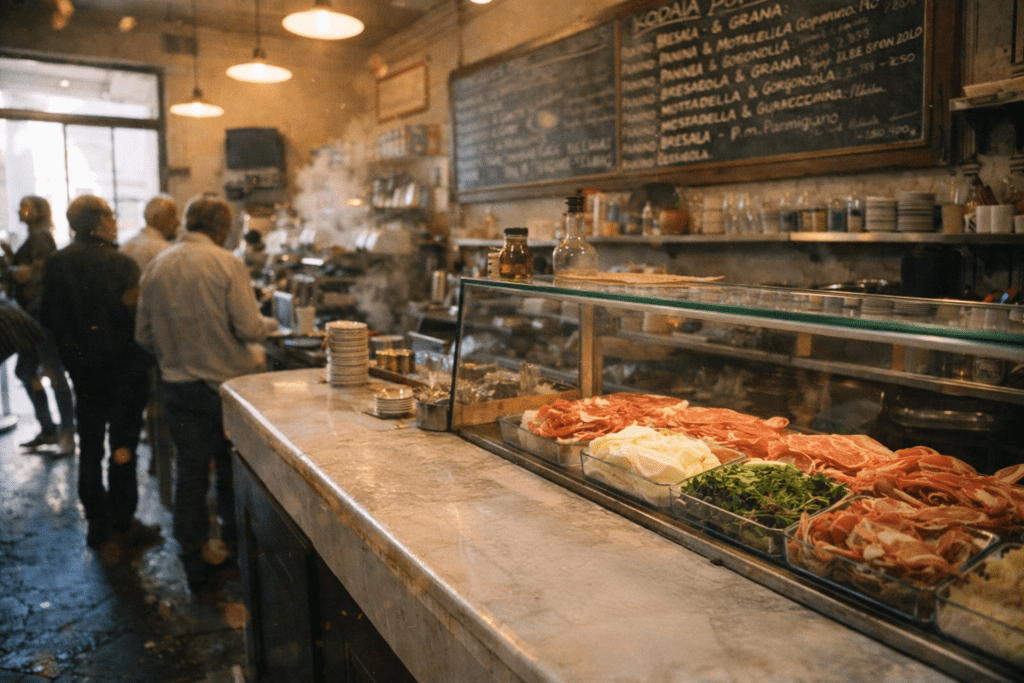
In Italy, panini belong to the rhythm of daily life. You find them at neighborhood coffee bars, train stations, school and university kiosks, and dedicated paninoteche. Late morning and lunch are prime time—pranzo veloce—when workers and students need something quick, good, and real.
In cities like Milan and Florence, paninoteche aren’t just shops—they’re the engine of the city. These aren’t restaurants in the traditional sense; they’re places where you stand at the counter, order with confidence, eat with your hands, and get back to life.
A paninoteca is, at its heart, a sandwich workshop: made-to-order panini, a chalkboard menu, maybe a few stools, often a small selection of beer or wine. No theatrics. No garnish for garnish’s sake. Just bread, fillings, and speed with dignity.
The Core Philosophy: Bread First, Product Always
If you want to understand Italian panini, start with the bread.
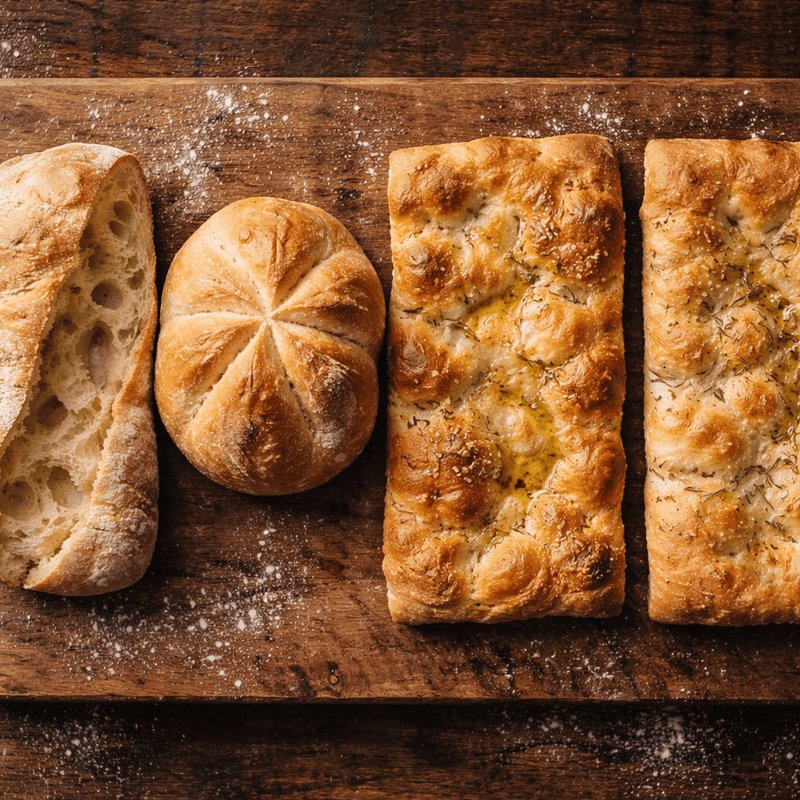
Ciabatta. Rosetta rolls. Schiacciata. Focaccia. Pizza bianca. Piadina. Puccia. Each region expresses itself through its bread, and the sandwich follows.
The bread is fresh. Sometimes lightly warmed. Sometimes not pressed at all. The idea is not crunch for crunch’s sake—it’s structure, aroma, and restraint.
And then the fillings: few, deliberate, uncompromising.
A classic Italian panino might include:
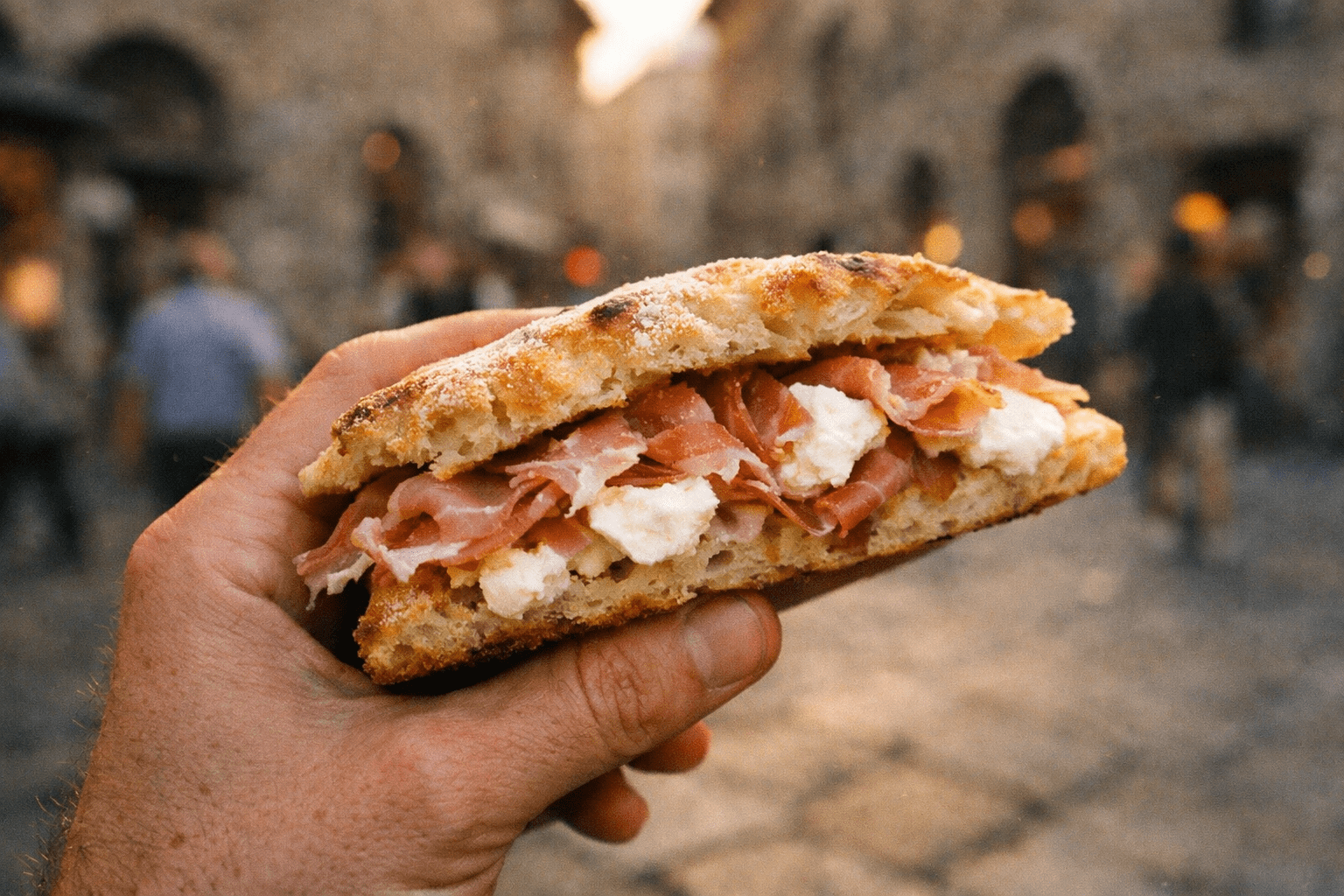
- Prosciutto crudo and mozzarella
- Mortadella and pecorino
- Tonno e carciofi
- Porchetta with salsa verde
Rarely more than two or three elements. No towering stacks. No conflicting flavors. The product speaks.
It’s the whole Italian philosophy in a single bite: incredible ingredients, zero ego, pure identity.
Regional Sandwich Identities
Panini are not generic across Italy—they are intensely local.
In northern regions like Lombardy, Emilia-Romagna, and Piedmont, panini often appear on focaccia, schiacciata, or piadina, alongside tramezzini and classic Milanese bar culture. In Milan, the panino became a symbol of urban elegance—quick, stylish, and intentional.
Central and southern Italy lean into deeply rooted traditions. In Lazio, the panino con porchetta is practically sacred. In Puglia, the puccia defines the category. Around Naples, pizza bianca or pane cafone becomes the vehicle for provola, anchovies, friarielli, or local cured meats.
Each sandwich tells you exactly where you are.
Hot, Cold, and the Myth of the “Panini Press”
Here’s a crucial point: in Italy, panino does not mean grilled.
Many panini are assembled cold or only lightly warmed. Some are toasted or briefly pressed—but that’s a service choice, not a defining feature. That heavy, sizzling press you see in every ‘Italian’ chain abroad? That’s an export. A myth.
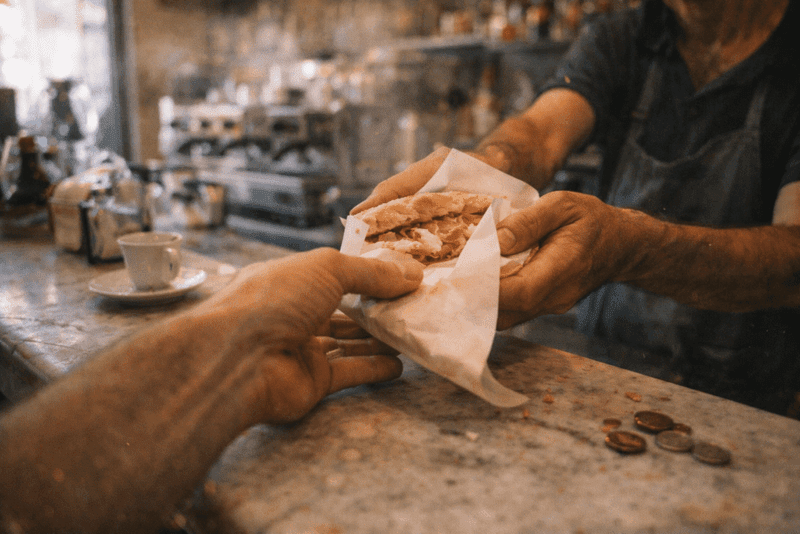
In Italy, the panino is not meant to be a heavy, melty centerpiece. It’s meant to be eaten standing at the bar, alongside an espresso, a beer, or a glass of wine. It’s fast, but never careless.
From Street Snack to Paninoteca Culture
Historically, the panino began as bar food and street food—a quick bite with wine or coffee. But in the 1960s and 70s, industrial cities like Milan transformed it into a proper lunch solution for office workers.
Dedicated paninoteche emerged, focusing on better bread, better salumi, and composed combinations. By the 1980s, youth culture embraced these spaces as social hubs, and the panino became a symbol of modern Italian life: informal, aspirational, and urban.
Today, the paninoteca is a defined category—distinct from trattoria or osteria. Counter service. Blackboard menus. Speed. Simplicity. Identity.
Panino vs. Panini: A Simple Truth
In Italian:
- Panino = one sandwich
- Panini = more than one sandwich
That’s it.
In Italy, “panini” is never a singular grilled object. That definition belongs to English-speaking countries. Understanding this distinction isn’t about grammar snobbery—it’s about respecting how Italians actually eat.
Bar Panini vs. Paninoteca Menus
At a basic bar or kiosk, panini are ultra-essential: a short list, minimal customization, maximum speed. Prosciutto e formaggio. Salame. Mozzarella e pomodoro. Coffee or a soft drink on the side.
Paninoteche expand the idea without betraying it. More combinations. Better ingredients. Specific breads. Sometimes grilled vegetables, cotoletta, or porchetta as hero fillings. Maybe a small salad. A curated drink list.
It’s the same culture—just more focused.
How to Order Like an Italian
Keep it simple:
- “Prendo un panino con prosciutto e mozzarella, per favore.”
- “Per me un panino con mortadella, grazie.”
If you want it warmed:
- “Lo può scaldare un po’?”
To eat in or take away:
- “Da mangiare qui.”
- “Da portare via.”
Confidence, clarity, and courtesy go a long way.
Why This Matters
The Italian panino reminds us of something essential: real food doesn’t need to be slow to be thoughtful. It doesn’t need excess to feel complete.
Italy makes food close to fast—but never careless. High-quality ingredients. Few elements. Regional soul. Everyday pleasure.
That’s the magic of panino culture. And once you experience it the Italian way, it changes how you see sandwiches forever.
Ready to Taste Italy the Way Italians Do?
The panino taught me something I couldn’t learn in any Michelin kitchen: Italy’s best food isn’t on the menu. It’s in the moments between—the roadside paninoteca you almost drove past, the baker who insists you try the bread before she wraps it, the winemaker who pulls out a bottle he doesn’t sell to restaurants.
That’s what we do at VIP Winery Vacations. Not tourist itineraries. Not staged experiences. We take small groups into the Italy that guidebooks miss—where lunch might be a perfect panino eaten standing at a marble counter, and dinner is whatever the nonna decides to make that night.
Wine is part of it. So is everything else.