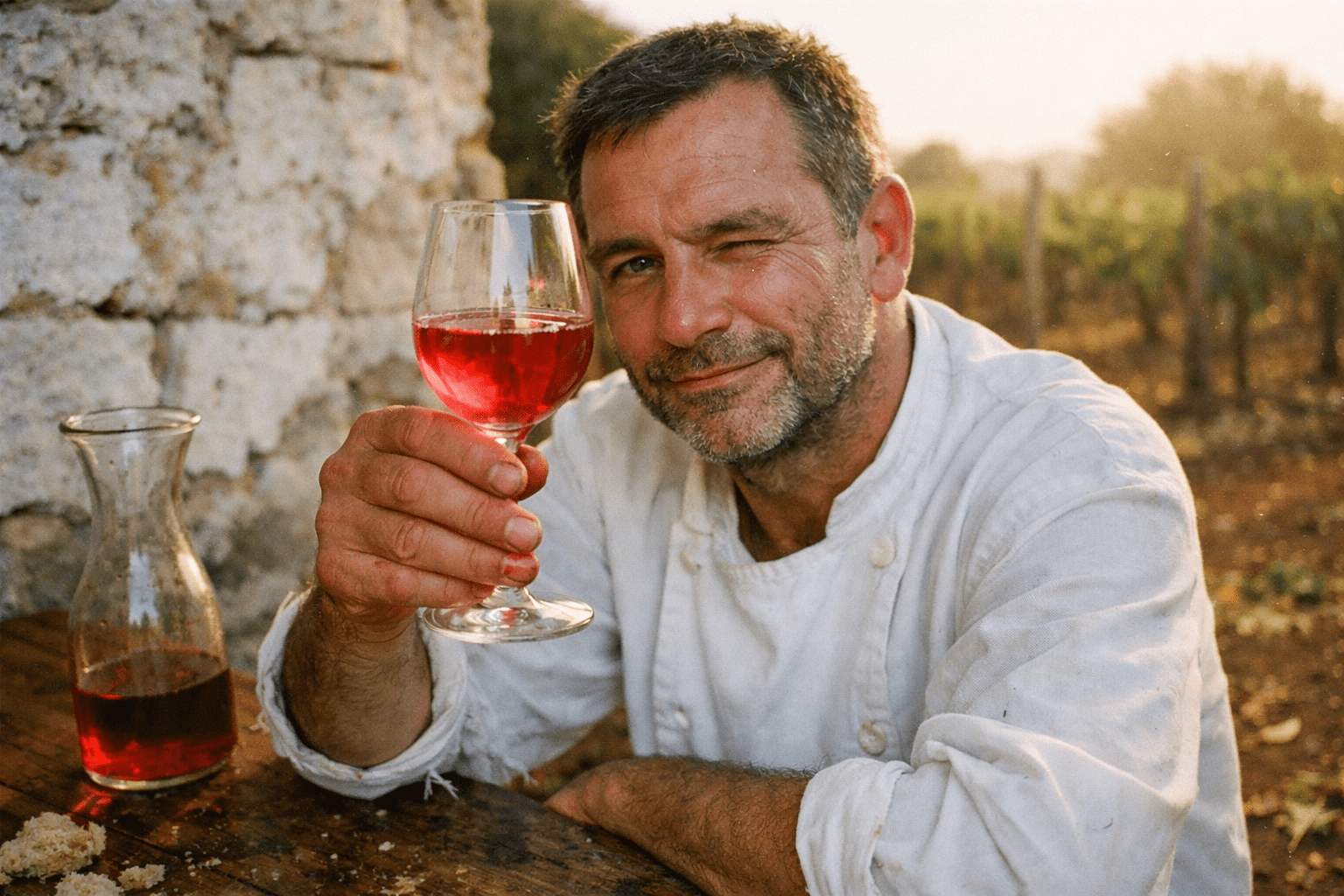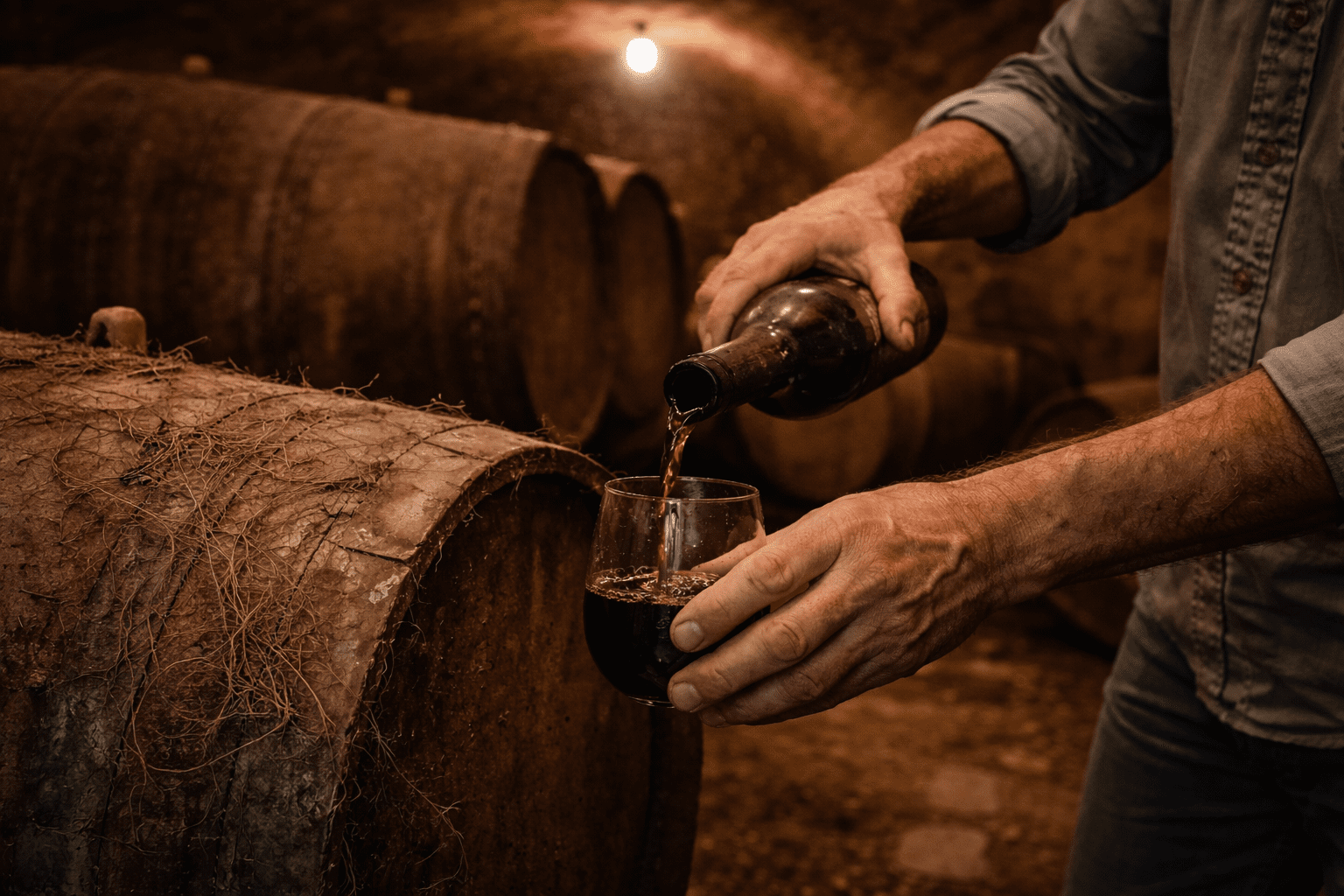










When people ask me about Puglia wine, most expect the usual answers: Primitivo, olive oil, seafood, rustic southern Italian cooking, handmade pastas like orecchiette. And they’re right.
But when I travel through Puglia with my wine and food guests, there’s another answer that surprises people every single time:
Rosé, or as it’s properly called in Italy, rosato.
Not pale Provence-style rosé.
Not poolside-only rosé.
Not trend rosé.
I’m talking about deeply colored, fruit-forward, structured Apulia rosé, especially Primitivo rosato and Negroamaro rosato, wines built for real food, real heat, and real table culture.
As a chef, wine buyer, and travel host who’s visited 350+ wineries across six countries and leads regular chef-led trips through Apulia, I can tell you this clearly:
Puglia didn’t follow the rosé trend.
Puglia built its own rosato tradition long before rosé was fashionable.
And once travelers taste it at the source. It converts them fast.
Why Wine & Food Travelers Should Care About Puglia Rosato
Most travelers associate rosé with southern France: light color, light body, easy sipping. That’s one style. It is not the only style.
In Puglia, rosato shows a completely different personality.
What my guests notice immediately:
- Darker color
- Fuller body
- More fruit concentration
- More texture on the palate
- Stronger table performance
- Serious refreshment in southern Italian heat
When I pour Apulia rosé during our trips, guests quickly say it out loud:
“This is not French rosé.”
Exactly right, and that’s the point.
For wine travelers, discovery happens when the wine matches the place, not when it imitates another region.
What Is Puglia Known For in Rosé? Primitivo Leads, But It’s Not Alone
If you’re exploring what is Puglia known for in pink wines, Primitivo rosato is the star, but not the only grape in play.
You’ll also see rosato made from:
- Primitivo
- Negroamaro
- Bombino Nero
- Other indigenous reds depending on zone
But Primitivo rosato is the regional signature for many travelers because it delivers:
- Deeper color
- Juicy fruit
- Fuller body
- Round texture
- Strong food compatibility
This is not a shy rosé. It’s generous.
Travelers expect delicate. Instead they get expressive.
Key Takeaway for Beginners: If you're new to Puglia wines, start with Primitivo rosato. It's fruit-forward, dry, and round. An approachable bridge between rosé and light red. It pairs with almost any food and converts most first-time tasters immediately. For red wine beginners, Primitivo (also called Zinfandel's Italian cousin) is the most accessible of Puglia's native varieties.
Rosato’s Peasant Roots: Practical Wine Before Prestige Wine
One thing I always explain at the table: rosato in Puglia did not start as a luxury category. It started as a practical one.
Historically, especially in Salento, growers making red wines from Negroamaro and other local grapes used:
- Short macerations
- Or saignée (bleeding juice off red fermentations)
The darker juice stayed behind for structured reds. The lighter juice became rosato for daily drinking.
It was farmhouse wine. Tavern wine. Worker’s wine.
Not prestigious, but essential.
And that’s exactly why it matters.
The 1943 Turning Point: Five Roses and Export History
One of the most important moments in Italian rosato history happened right here in Puglia.
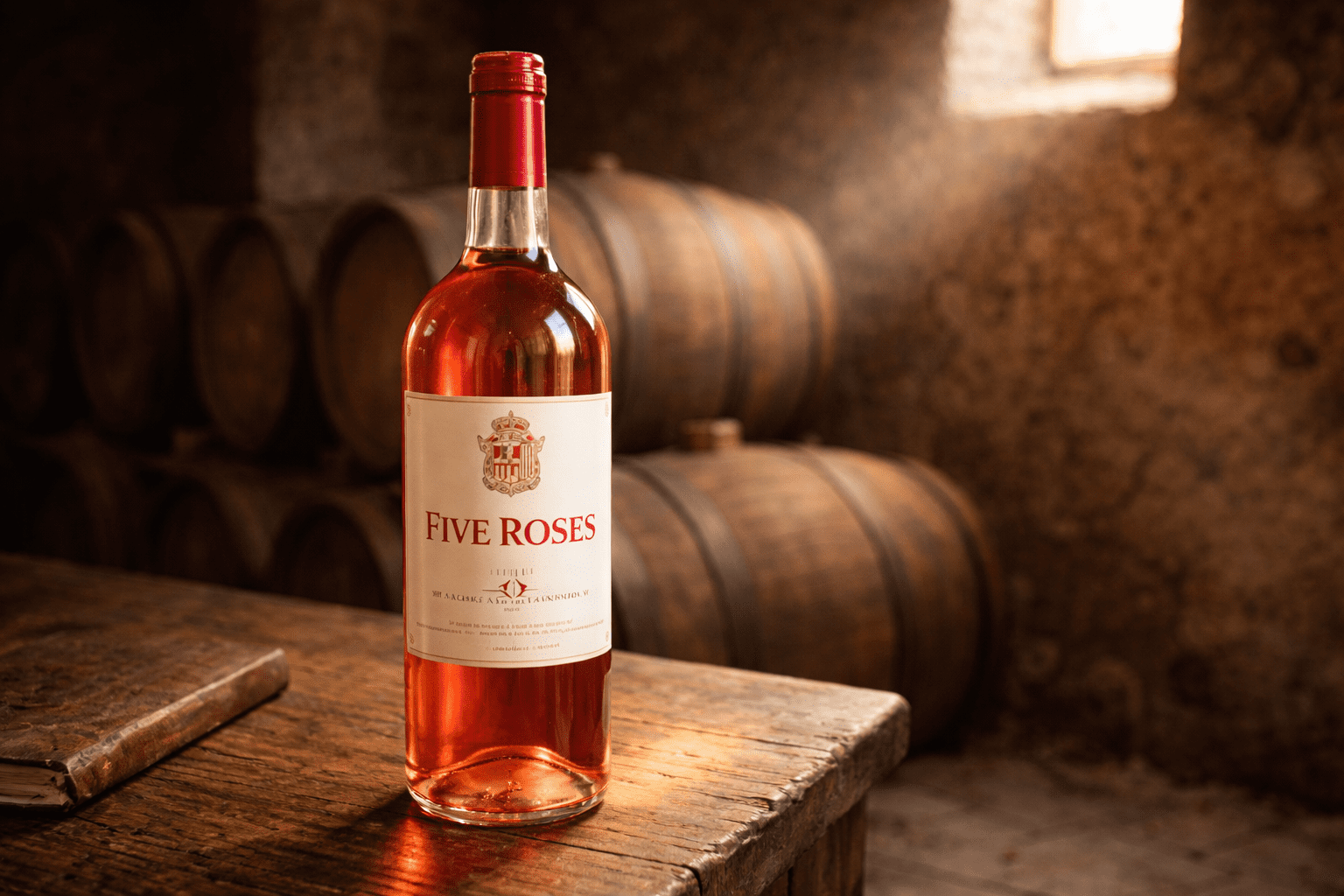
In 1943, the historic estate Leone de Castris in Salice Salentino bottled a rosato called Five Roses, made from Negroamaro and Malvasia Nera.
An American Allied officer tasted it during the war presence in the region, loved it, and arranged shipments to the U.S.
That wine is widely recognized as:
Italy’s first bottled, commercially exported rosato.
Rosato moved from by-product to recognized category. It started in Puglia.
Where Puglia Rosato Grows: Climate, Soils, and Heat
Rosato production is spread across Puglia, one of Italy’s most distinctive wine regions, with especially strong expressions in:
- Salento
- Salice Salentino
- Manduria zones
- Southern coastal areas
- Castel del Monte (Bombino Nero rosato)
What travelers see when visiting:
- Intense sunlight
- Dry heat
- Red soils
- Vineyards close to the sea
- Constant wind influence
These growing conditions push grapes to full ripeness. That explains why Puglia rosato carries more flavor and body than cooler-climate rosé.
When you stand in the vineyard with the producer, the wine makes sense immediately.
DOC and DOCG: When Rosato Earned Legal Respect
Rosato in Puglia didn’t just survive. It earned classification.
Salice Salentino Rosato DOC formalized Negroamaro-based rosato styles.
Then northern Puglia raised the bar further with:
Castel del Monte Bombino Nero DOCG
That’s one of the only DOCG designations in Italy dedicated entirely to rosato.
That tells serious travelers something important:
This region doesn’t treat rosato as an afterthought.
It treats it as identity wine.
How Puglia Rosato Tastes: By Grape Style
Key Takeaway: The main red grape varieties used for rosato in Puglia are Negroamaro, Primitivo, and Bombino Nero. Negroamaro dominates in Salento and Salice Salentino, Primitivo is the traveler favorite for its fuller body, and Bombino Nero is the signature grape of the Castel del Monte DOCG, one of Italy's only DOCG designations dedicated entirely to rosato.
Negroamaro Rosato: Salento Style
- Deeper pink color
- Cherry and pomegranate
- Blood orange
- Mediterranean herbs
- Saline edge
- Firm acidity
- Slightly savory finish
Excellent with real food, not just aperitivo snacks. (Learn more about Negroamaro)
Bombino Nero Rosato: Castel del Monte
- Lighter salmon tones
- Rosehip and raspberry
- Citrus lift
- High acidity
- Mineral line
- Elegant and precise
Fantastic with crudo, fried seafood, and burrata.
Primitivo Rosato: Traveler Favorite
- Fuller body
- Generous fruit
- Strawberry and watermelon
- Redcurrant
- Dry but round
- Bridge between rosé and light red
This is often the conversion wine for my guests.
What Travelers Experience On Site
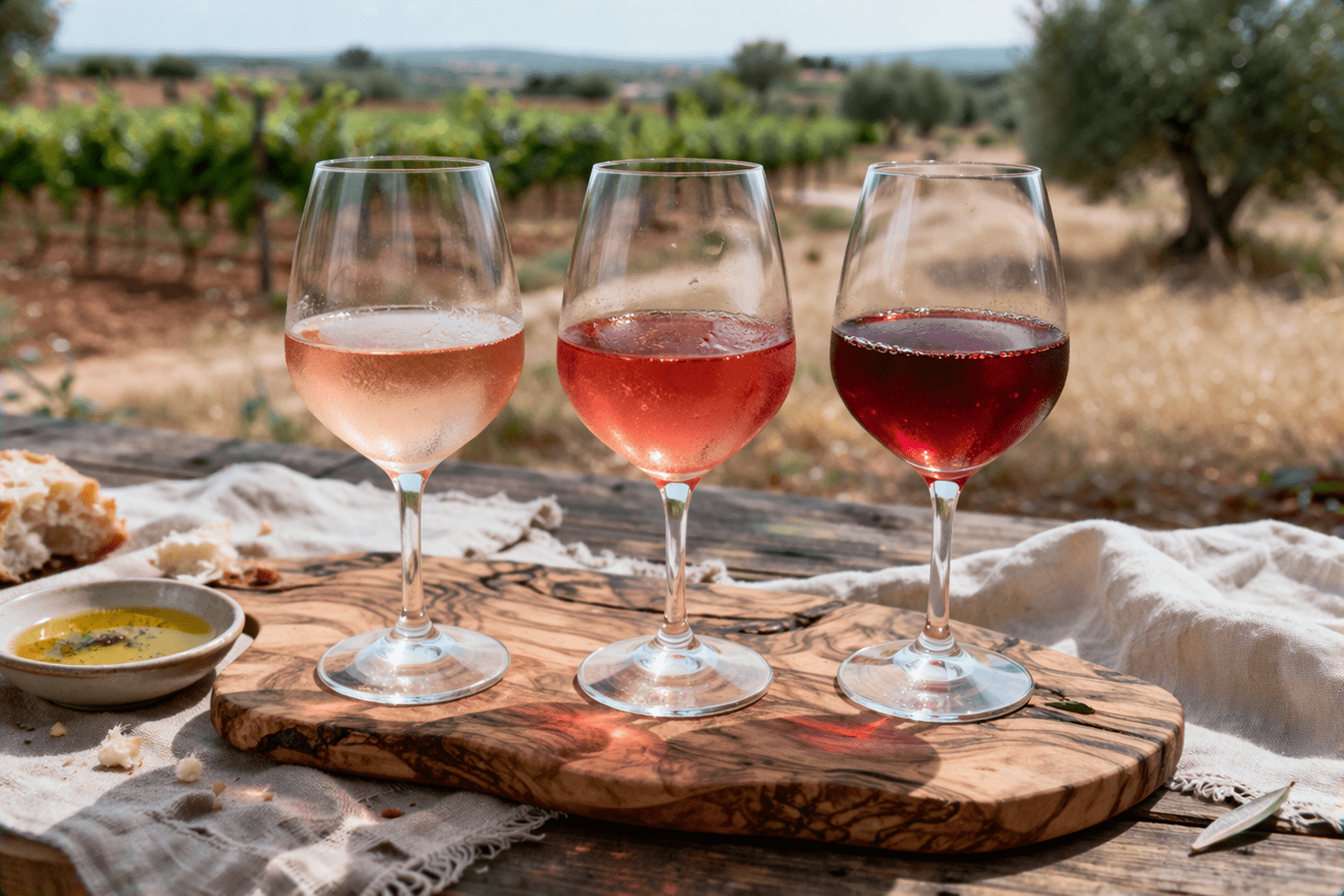
We encounter rosato everywhere: wineries, restaurants, seaside lunches, vineyard meals.
Nothing beats:
A full-bodied Puglian rosato, midday, in the intense southern heat, with seafood on the table.
Rosato pairs beautifully with:
- Grilled fish
- Vegetable antipasti
- Pasta
- Cheese
- Mixed spreads
- Pizza
- Salumi
Guests quickly realize it works with almost everything, and once you understand the unwritten rules of Italian food culture, rosato’s role at the table makes even more sense.
I’ve watched people order it once, then keep it on the table all meal.
Key Takeaway, Salice Salentino Food Pairings: Salice Salentino Rosato (Negroamaro-based, DOC) pairs best with grilled fish, burrata, orecchiette with vegetables, mixed antipasti, and salumi. Its firm acidity and savory finish make it one of the most food-versatile rosatos in southern Italy. Serve slightly chilled (10–12°C) to preserve its structure and fruit.
How I Teach Rosato on My Trips
I always have guests taste the wine first, before food, so the palate understands structure before flavors interfere.
Then we taste again with food and watch the transformation.
That’s education plus experience.
At small family wineries (which is where I focus), guests meet the people behind the bottle. When you like the producer, you trust the wine more. When you share food with them, it becomes memory, not beverage.
Guests leave:
- Pleasantly surprised
- More curious
- More connected
- Often newly converted rosato fans
Key Takeaway, Choosing Puglia Red Wine for Dinner Parties: For dinner parties, look for Salice Salentino DOC (Negroamaro-based) or Primitivo di Manduria DOC. Both are structured enough for a table setting, food-friendly, and affordable relative to their quality. The best way to understand Puglia wine quality isn't reading labels. It's tasting with a producer. Guests on our chef-led Apulia tours consistently choose Puglia wines as their top discovery of the trip.
What to Expect When Visiting Puglia Wineries
Most wine travel in Italy still centers on Tuscany and Piedmont. Travelers arrive expecting Puglia to feel secondary.
It doesn’t.
What I’ve found, after visiting more than 350 wineries across six countries, is that Puglia offers something those famous northern regions often can’t:
Unguarded access.
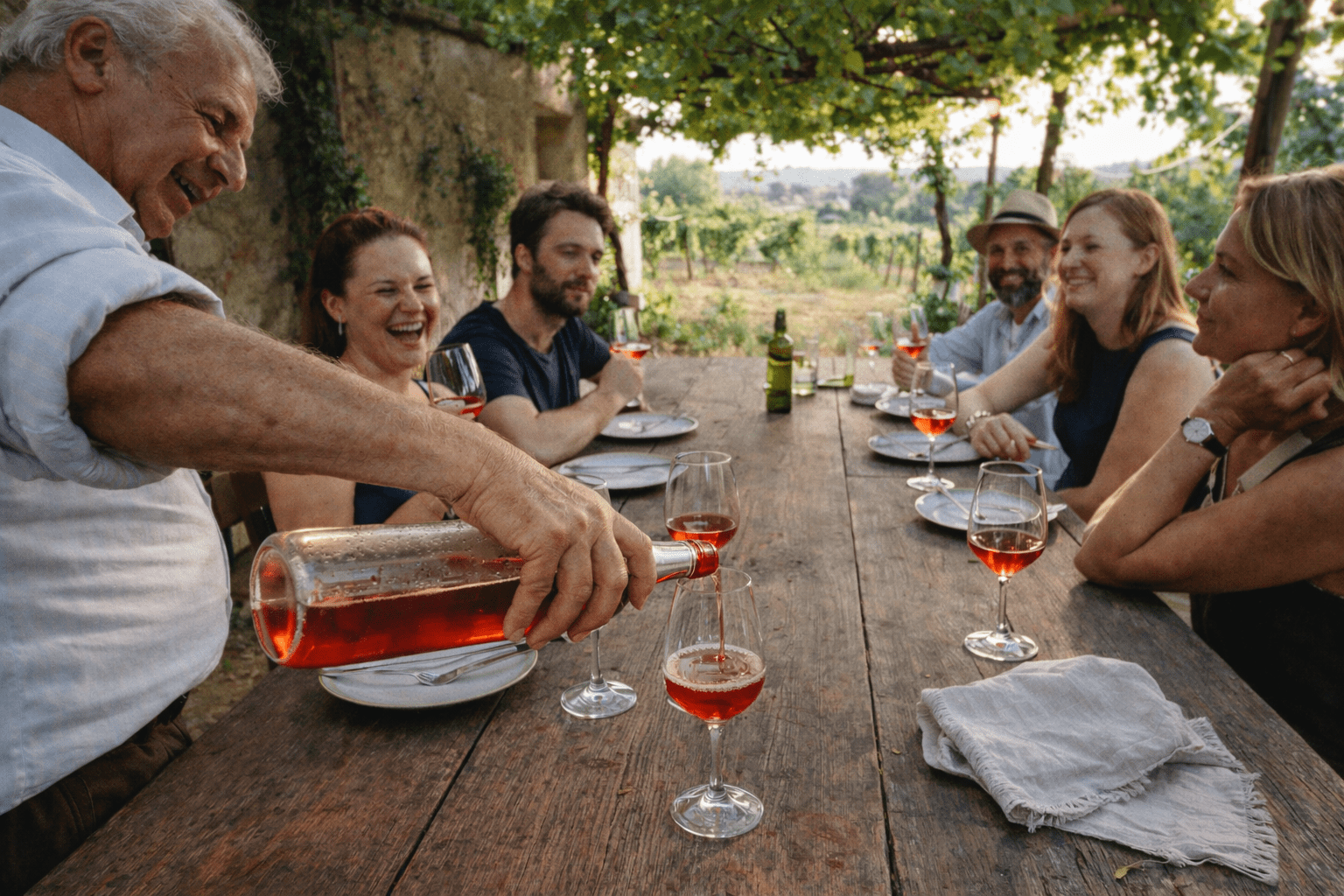
At the small family estates I bring guests to, you’re not on a tasting room tour with forty strangers. You’re often sitting with the winemaker, sometimes the grandparent who started the estate, sometimes the son who just came back from studying viticulture abroad.
The conversation is real. The pours are generous. The food that appears (and food always appears) is whatever they’re eating that week.
What the visit typically looks like:
- A walk through the vineyard before tasting, context before glass
- Introduction to the cellar, the barrels, the production style
- Seated tasting with 4–6 wines, usually with local olive oil, bread, cheeses, or cured meats
- A natural flow into conversation about rosato, the land, the family history
- No rush. These visits rarely have a hard end time
What surprises guests most:
The intimacy. You are a guest, not a customer. That changes everything about how the wine tastes and what you remember.
I’ve had guests tell me a single afternoon at a Salice Salentino producer became the defining memory of their entire Italy trip.
Not because the wine was the most expensive they’d ever had.
Because it was the most honest.
Key Takeaway, Visiting Puglia Wineries: Puglia winery visits are typically smaller, more personal, and more food-integrated than Tuscany or Piedmont. Expect seated tastings with the producer, vineyard walks, and spontaneous food, not formal tasting rooms. The best way to experience Puglia wine is at the source, at a family estate, with a knowledgeable guide who knows the producers personally.
What Most Visitors Don’t Know About Puglia Rosato
Most travelers don’t realize:
- Darker rosato styles are intentional, not a flaw, but a feature of extended maceration and riper fruit
- Primitivo rosato is a regional star, not just a red wine grape
- Puglia produced Italy’s first commercially exported rosato (Leone de Castris Five Roses, 1943)
- Castel del Monte Bombino Nero holds one of Italy’s only rosato-dedicated DOCG designations
- Rosato was everyday working wine in Salento long before rosé became a global trend
- The best rosato in Puglia comes from producers who’ve been making it for generations, not from brands chasing the pink wine market
When you know the backstory, the wine tastes different.
And when you taste it at the source, standing in the vineyard, sitting with the family, eating whatever they pulled out of the kitchen that morning, it becomes something else entirely.
It becomes a reason to come back.
The Real Way to Experience Puglia Wine
I learned something important early in my wine career, at Pierre Koffmann’s Michelin three-star La Tante Claire in London, where the Burgundy collection was sourced entirely from grower-producers, not négociants.
That experience shaped how I approach wine ever since: it’s about the people, the stories, and the integrity behind the bottle, not labels and scores.
That’s exactly how I built VIP Winery Vacations.
Our Apulia trips bring Puglia wine to life through intimate, relationship-led experiences that feel more like visiting friends than booking a tour. We go to the family estates I know personally. We taste with the producers. We eat their food. We learn their history.
If Puglia rosato sounds like something you need to taste at the source. It is.
And we’d love to take you there.