









If you really want to understand what Puglia is famous for, don’t start with a restaurant reservation.
Start with taralli.
Those small, crunchy, ring-shaped crackers that show up everywhere—on café counters, in family kitchens, beside every glass of wine across Puglia. Humble. Addictive. Quietly symbolic of life here.
I grew up with taralli. They were never announced—just there. A basket at my grandmother’s house. A tin on my aunt’s table. The moment the adults started talking and the wine started pouring, taralli appeared like clockwork.
That kind of permanence makes food feel safe. Familiar. Essential.
Now my granddaughter—not even two—walks straight to the taralli basket at my restaurant every time she visits. No asking. No hesitation. She just knows.
That’s how traditions survive. Quietly. Naturally. One generation at a time.
What Are Taralli? The Humble Ring That Defines Puglia
Taralli are ring-shaped crackers, usually bite-sized, made from the simplest pantry staples: flour, extra-virgin olive oil, white wine, and salt. No eggs. No luxury. Just restraint and technique.
They’re boiled, then baked—a double-cook method that creates that glossy snap you can’t stop reaching for. Crunchy all the way through. Not a cracker that shatters—more like a breadstick with a clean, satisfying break.
Born as peasant food, taralli have become one of the most recognizable edible emblems of southern Italy—and in Puglia, they’re the default: always nearby, always refilled.
You’ll find them everywhere. On restaurant tables before you even order. In homes, waiting in ceramic bowls near the couch. At wine bars, served in baskets alongside your aperitivo.
They’re never the main event. They’re the supporting actor that steals every scene.
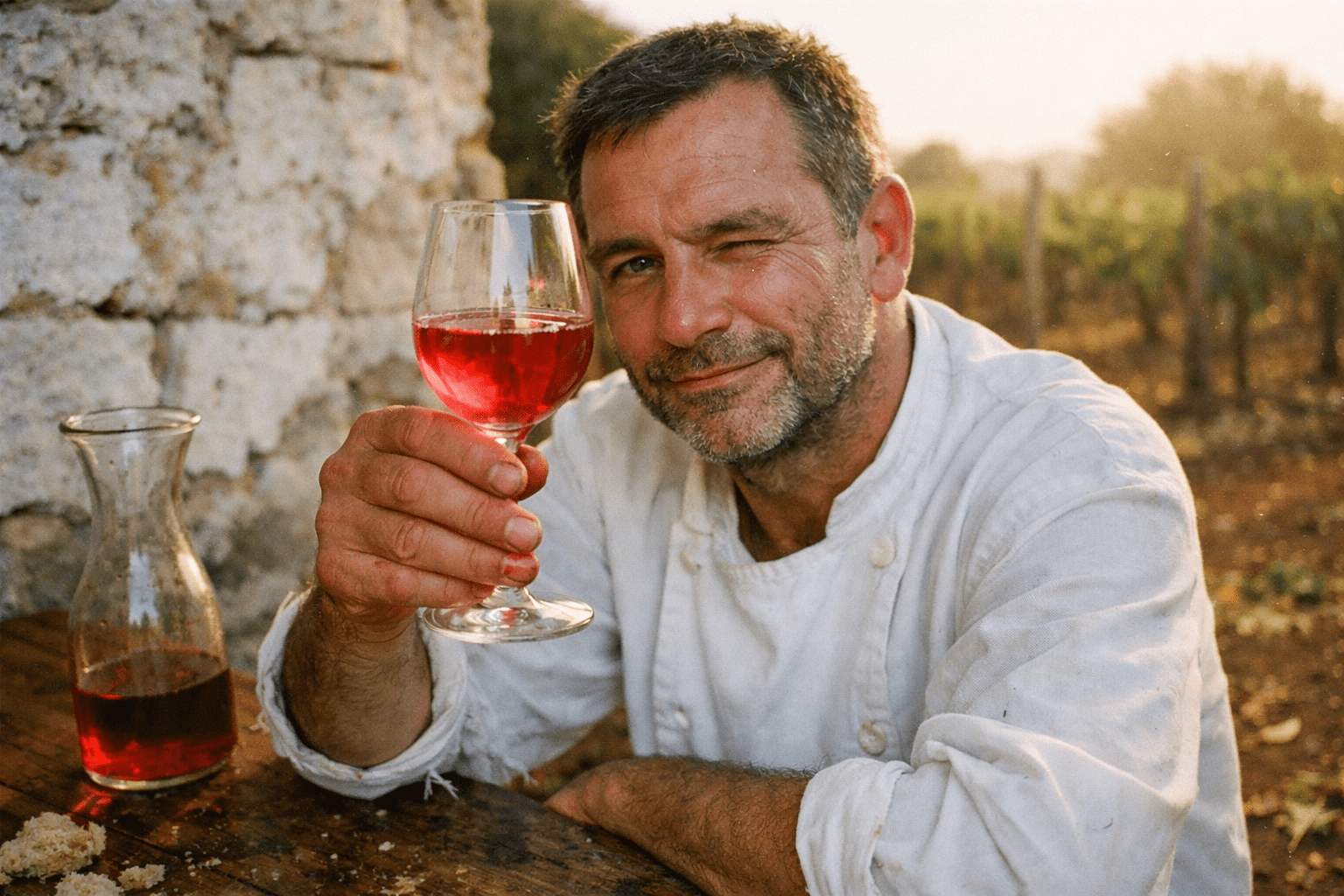
After visiting 350+ wineries across six countries over two decades, I can tell you taralli aren’t on the table by accident. They’re functional. They refresh your palate between sips without taking over. Olive oil gives just enough richness to take the edge off tannins, salt lifts flavors, and that crunch resets your senses.
That’s why they show up on wine boards and bar counters across southern Italy—they’re built for wine, not decoration.
Traditional Puglia Food: From Survival to Symbol
Most sources trace taralli squarely to Puglia, with origin stories pointing back centuries—an answer to famine, scarcity, and the realities of feeding families across southern Italy.
Cooks used what they had—no eggs, no luxury—just flour, oil, wine, and salt.
Even the name carries a bit of mystery. Some connect it to Greek daratos (“bread”), others to Latin torrere (“to toast”). The details vary depending on who you read, but the idea is consistent: something old, toasted, and built to last.
Originally baked in communal ovens and eaten in the fields by farmers, taralli slowly evolved into a symbol of Apulian hospitality—served with wine, conversation, and time.
And that wasn’t accidental. With limited ingredients, every choice mattered. The double-cooking process wasn’t just technique—it was preservation. Boiling, then baking, drove out moisture and extended shelf life.
But somewhere along the way, taralli stopped being only survival food.
They became what you offered guests. What appeared when neighbors dropped by. The edible gesture that said, “Sit. Stay. Let’s talk.”
Today, taralli hold PAT status—Prodotto Agroalimentare Tradizionale (Traditional Italian Agri-food Product), an official recognition of foods that belong to Italy’s heritage.
From famine food to heritage symbol. That’s Puglia in a single bite.
The Double-Cook Method That Creates Magic
Classic taralli use an egg-free dough, often with durum or 00 flour, olive oil, dry white wine, and salt. Some families add a whisper of yeast or baking powder, but restraint is the rule.
The process matters.
Here’s how it works:
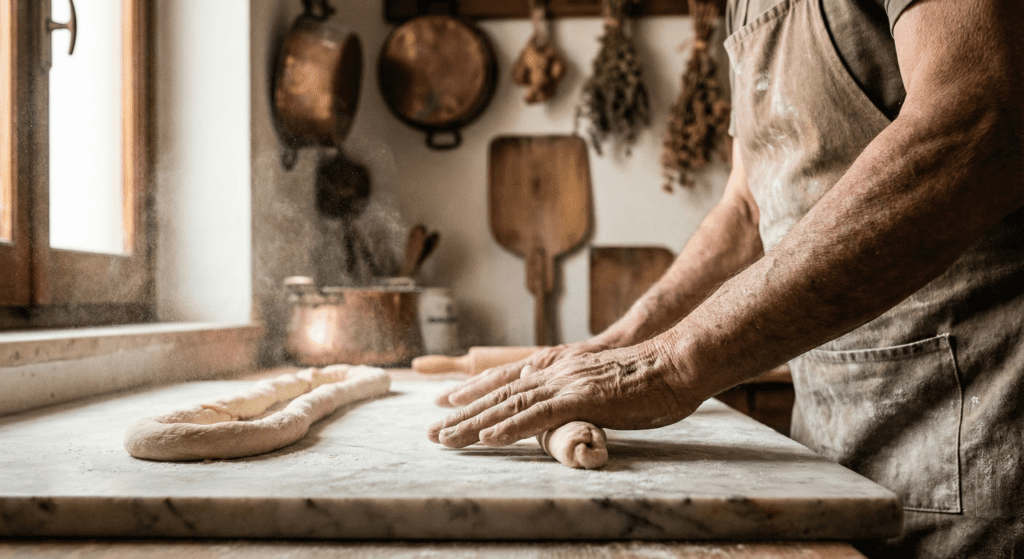
- Dough is rolled into thin ropes—roughly pencil-thick, sometimes a touch thicker. Traditionally done by hand, though commercial producers use machines.
- Cut into short lengths and shaped into rings—each piece gets formed into a circle, ends pressed together. The ring shape isn’t decorative. It helps with even cooking, even texture, and maximum crunch.
- Briefly boiled until they float—this is the step that separates taralli from most other Italian crackers. Drop them into simmering water. When they bob to the surface, they’re ready—often in about a minute.
- Baked until golden, dry, and snappy—into a hot oven they go until that pale gold color develops and the remaining moisture bakes out.
That boiling step? That’s where the magic happens.
Boiling gelatinizes the starch on the surface, creating a thin skin that sets the exterior and gives taralli their distinctive glossy finish. It also helps them hold their shape in the oven—so instead of turning bready, they dry into that dense snap.
It’s the same principle behind bagels: boil first, bake second. The result is a texture you can’t fake.
And once you start eating them? Good luck stopping. Crisp enough to feel satisfying, light enough to keep reaching—exactly the kind of food made for wine, and for company.
Palo del Colle Taralli: The Heart of Production
While taralli are everywhere in Puglia, Palo del Colle—just outside Bari—is often cited as a stronghold of production.
This isn’t accidental geography. Palo del Colle sits in the orbit of serious extra-virgin olive oil country, and when your primary ingredient is olive oil, quality matters. The terroir shows up in the flavor.
Artisan producers here still make taralli in small batches—hand-rolling dough, boiling briefly, then baking until dry, glossy, and snappy. It’s slow. It’s deliberate. And you can taste the difference.
Industrial taralli exist too—uniform, widely available, and fine for everyday snacking. But they often miss the slight irregularities, the hand-formed character, and the richness of truly good extra-virgin oil that defines the real thing.
When we bring guests to Puglia on our wine tours, taralli aren’t an afterthought. They’re part of the story—the basket on the table, the gesture that opens conversations about terroir, tradition, and how food connects people across time.
Restraint as Art Form
Savory taralli are all about restraint—bold enough to stand up to wine, gentle enough to let olive oil shine.
Two of the most iconic styles:
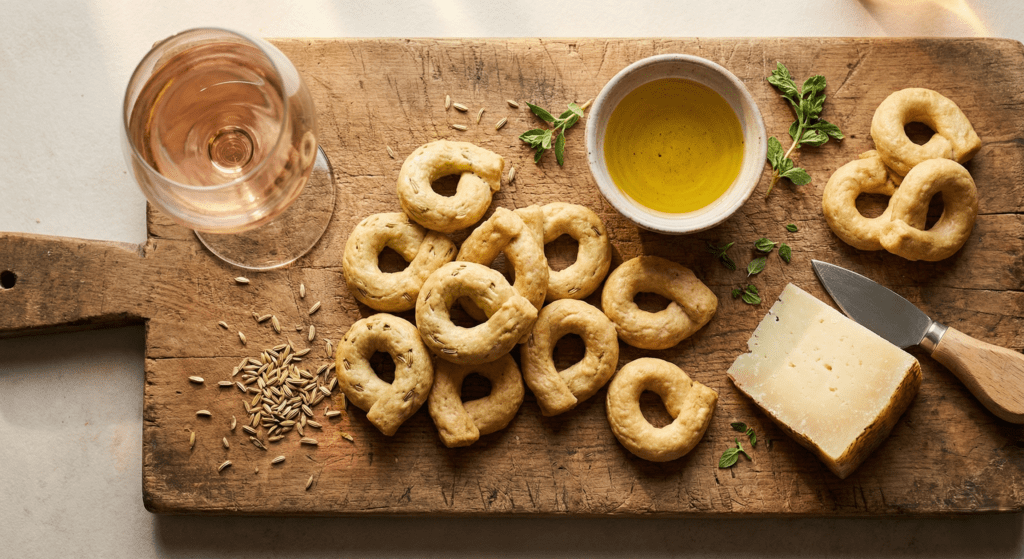
- Fennel seed (semi di finocchio) – the signature version: lightly aromatic and unmistakably from Puglia. The fennel doesn’t shout. It whispers—just enough to add complexity without bulldozing the olive oil.
- Coarsely ground black pepper – sharper, spicier, sometimes paired with fennel for a more assertive bite. This is the one that wakes up your palate between sips.
Other variations you’ll see:
- Peperoncino (chili flakes) – Southern Italian heat. Not overwhelming—just enough to make you reach for your glass.
- Anise seed – a little sweeter than fennel, more perfumed. Less common, but still part of the tradition.
- Onion – often in thicker styles. Adds savory depth and a rounder finish.
- Herb blends – oregano and other herbs, sometimes with black pepper.
If you want a lineup that screams Puglia: fennel, fennel + black pepper, and peperoncino. That’s the trinity.
You’ll also find sweet versions—sugar, almonds, even chocolate-coated. They have their place. But if you’re trying to understand Puglia’s soul, look to the savory ones: dry, olive-oil-driven, wine-friendly—built for conversation, not dessert.
Italian Aperitivo Snacks: Why Taralli Are the Perfect Companion
Taralli are designed for drinking. Period.
Their dry, crunchy, olive-oil-rich bite makes them the ideal aperitivo companion—somewhere between a cracker, breadstick, and biscuit.
After visiting 350+ wineries across six countries over two decades, I can tell you: taralli aren’t on the table by accident. They’re functional. They refresh your palate between sips without taking over. Olive oil gives just enough richness to take the edge off tannins, salt lifts flavors, and that crunch resets your senses.
That’s why they show up on wine boards and bar counters across southern Italy. They make the wine taste better and help conversation last longer.
Wine pairings:
- Puglian rosato (Negroamaro or Primitivo) – The pairing. Dry, savory rosé with enough body for fennel or black pepper taralli. The acidity cuts the olive oil; the crunch plays off the wine’s smoothness.
- Negroamaro reds – Especially with pepper or chili taralli. The spice can amplify dark fruit and earthy notes without clashing.
- Primitivo di Manduria – Bold, fruit-forward, structured. Pair with plain or fennel taralli: let the wine lead while the taralli keep you grounded.
- Crisp whites from Puglia (Verdeca, Bombino Bianco, Fiano Minutolo) – Citrus and herbal notes love the richness of olive oil; fennel echoes those green, savory edges.
- Sparkling wine, Prosecco, or a spritz – Bubbles cut through the density. Perfect for pre-dinner conversation.
The principle is simple: taralli don’t compete. They support. They’re the rhythm section, not the lead guitar.
That’s why they belong around people. They belong near wine. They create the conditions for conversation to slow down and deepen.
The Basket That’s Always There
Taralli were in my life before I had words for why.
Every relative’s house. Every visit. Every table.
They were never announced. They were just there—in a basket, in a tin, waiting patiently while adults talked and wine flowed. That made them feel permanent. Safe. Familiar.
I remember sitting at my aunt’s kitchen table, legs swinging because my feet didn’t reach the floor. I watched the grown-ups lean in close over glasses of wine. Voices rising and falling. Laughter punctuating long stories I didn’t fully understand.
And the taralli? Always within reach. Refreshed before the basket ever went empty.
I learned early: when taralli came out, time slowed down. Nobody was rushing anywhere. Conversation wasn’t on a clock. The basket meant stay, sit, be here.
Years later, when I opened Aroma Thyme Bistro, bringing taralli into the restaurant was never a “menu decision.” It was instinct. They belong around people. They belong near wine.
And now, watching my grandkids love them the way I did is one of those moments that stops you in your tracks.
My granddaughter—not even two—walks straight to the basket every time she comes in. No hesitation. She knows exactly where they are. She reaches up, grabs a handful, and settles in like she’s been doing it her whole life.
Which, I suppose, she has.
That’s how traditions survive. Quietly. Naturally. One generation at a time.
Baskets stay full. Tables slow down. And you reach for something familiar while the people you love laugh around you.
Authentic Puglia Food: More Than a Snack
When people search what is Puglia famous for, taralli deserve to be near the top of the list.
Not because they’re fancy. Not because they’re complicated.
Because they represent everything Puglia is about.
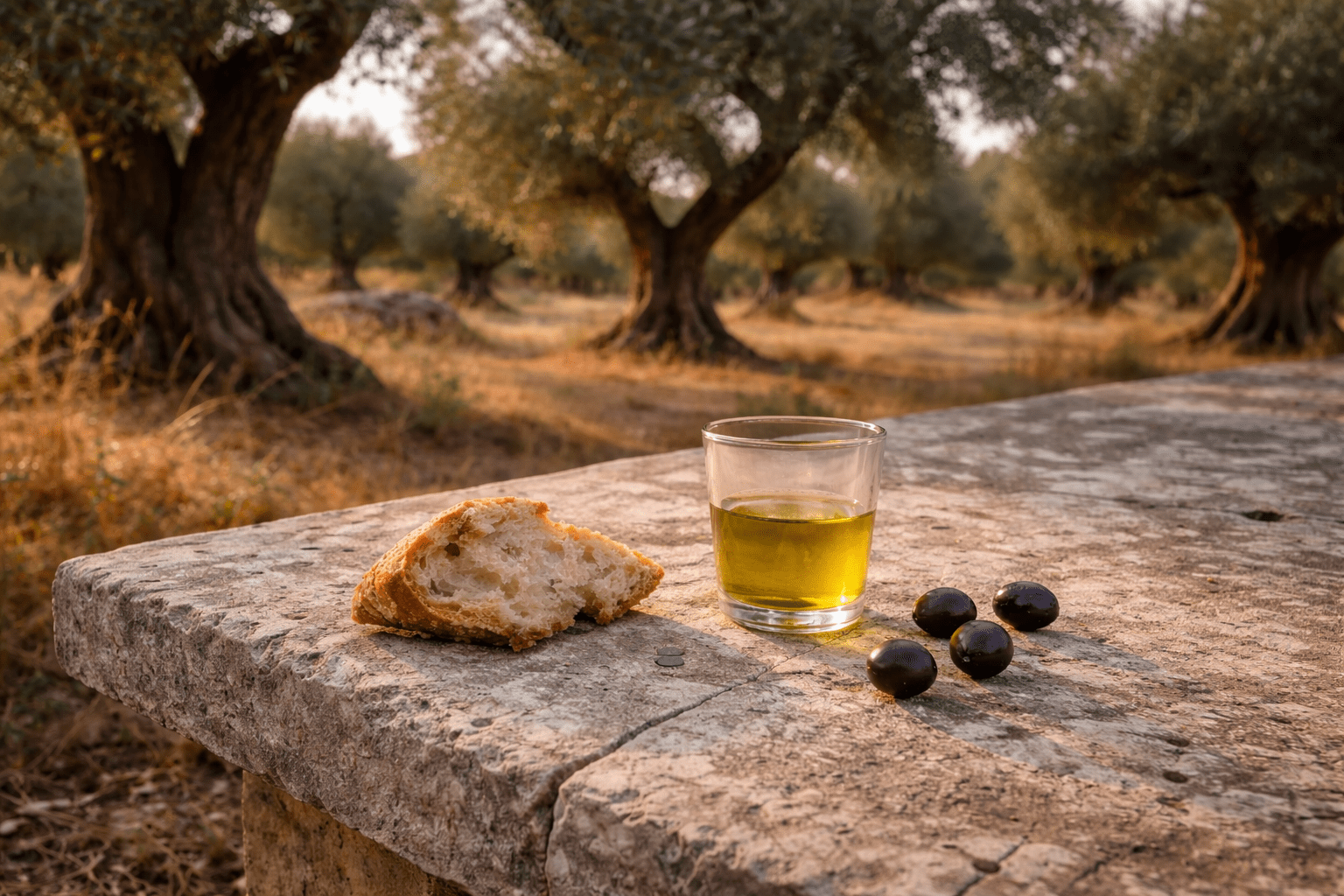
Olive oil culture. Taralli are only as good as the extra-virgin olive oil that goes into them. The oil isn’t just an ingredient—it’s the signature. When you bite into a great taralli, you taste the groves, the harvest, the press.
Frugality turned brilliant. Flour, oil, wine, salt. Nothing wasted. Nothing excessive. Food elevated not through luxury, but through technique, time, and tradition.
Food designed for sharing. Taralli aren’t meant to be rushed. They live in the space between sips of wine, between sentences in a conversation. They slow you down on purpose.
A life built around wine, time, and connection. Taralli aren’t sustenance. They’re an edible philosophy: sit, stay, talk, connect.
This is one chapter in our series: What Is Puglia Famous For?
We’ve already explored orecchiette and burrata. There’s more to come—olive oil and rosato, Primitivo di Manduria, Spaghetti all’Assassina, trulli architecture, and more.
But taralli? They’re the thread that runs through everything else.
Puglia Culinary Tours: Beyond Postcards and Prestige
At VIP Winery Vacations, this is exactly what we’re about—going beyond postcards and prestige and into real food, real people, real traditions.
Taralli aren’t just a snack. They’re a reminder that the most meaningful food experiences are often the simplest ones—the kind you grow up with, the kind your grandchildren recognize without being told.
When we design our Puglia tours, we’re not chasing flashy restaurants or Instagrammable moments. We chase the truth: the basket on the table, the family-run winery, conversations that stretch without anyone watching the clock.
That’s Puglia. That’s the mission.
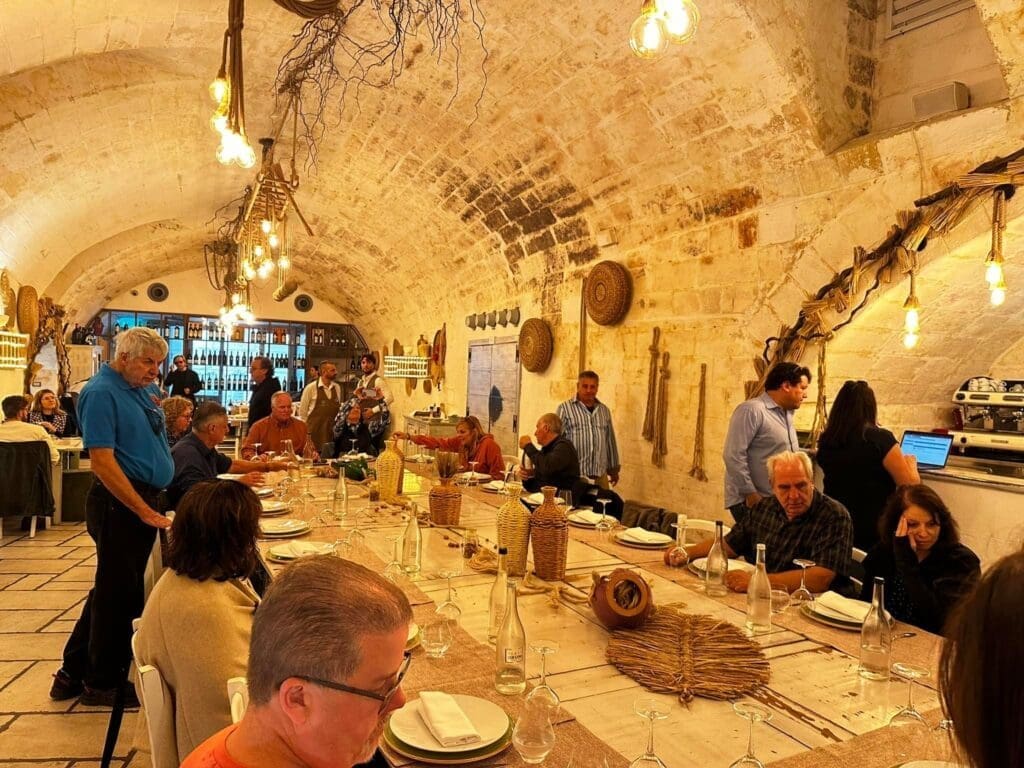
We want you to taste the olive oil that defines the region. To understand why the double-cook matters. To sit at a table where taralli arrive without fanfare and wine flows without pretension.
To feel what to eat in Puglia when food isn’t performance—it’s connection.
This is one chapter in our series: What Is Puglia Famous For?
Stay tuned. The basket is still full.