
What I Learned From Anton Mosimann About Standards, Simplicity, and Hospitality
Early in my career, I had a decision to make: take a bigger title, or admit that I still had more to learn.
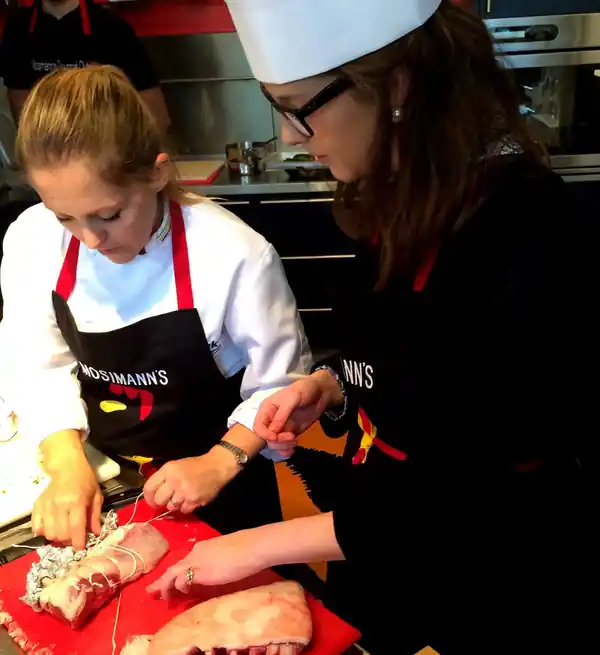
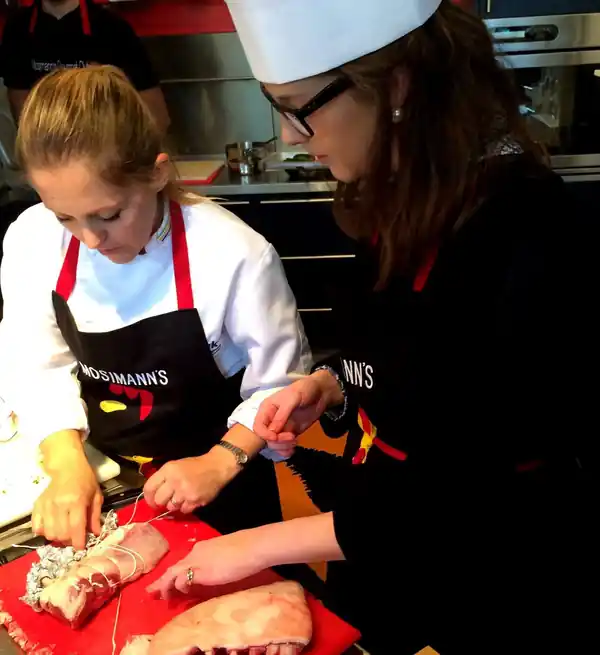
I chose to learn. That decision took me to London in 1997, where I spent time in kitchens that shaped the way I think about food, leadership, and hospitality. During my final week there, I worked briefly at Anton Mosimann’s private dining club, Mosimann’s, under Chef Anton Mosimann. I was not Anton Mosimann’s long-term apprentice, and I do not want to make a short stage sound bigger than it was. But even a short experience in a kitchen with clear standards can leave a long imprint.
What stayed with me was not glamour. It was the discipline behind simplicity: the idea that ingredients, technique, consistency, and preparation have to do the work.
Key Takeaway: My brief 1997 stage at Mosimann's reinforced a lesson I have carried through the rest of my career. Standards are not about making food or hospitality feel complicated. They are about doing the fundamentals consistently, removing what does not belong, and preparing well enough that the final experience feels simple to the guest.
What did Chef Marcus Guiliano learn from Anton Mosimann about standards, simplicity, and hospitality?
What I learned was that high standards show up in discipline, consistency, leadership, and restraint. My memory of Mosimann’s makes that lesson more concrete: the standards did not depend on aggression. I saw calm leadership, respect for the people in the kitchen, and culinary standards built into systems designed to make precision repeatable. The lesson was not that every chef has to cook like Anton Mosimann. It was that serious hospitality depends on repeatable habits, not occasional flashes of talent.
That mattered to me because I had gone to London specifically to learn. I had already been offered a path that looked like advancement on paper. But I did not think a title automatically meant I was ready for everything the role demanded. London gave me a chance to put myself in environments where the expectations were higher and the excuses were fewer.
Mosimann’s added another piece to that education. Standards can be quiet. Guests may never see the prep list, the repetition, or the decisions that happen before service. They experience the result.
I went to London to learn, not to collect titles
One of the most important decisions I made early in my career was turning down an executive chef opportunity because I believed I still had more to learn. That choice was not about avoiding responsibility. It was about respecting it.
I went to London to get educated through experience. I staged at Pierre Koffmann’s La Tante Claire, spent time under Paul Gayler at The Lanesborough, and finished that period with my brief stage at Mosimann’s. Each kitchen had its own identity, but the larger lesson was the same. If you want to grow, you have to put yourself around people and systems that expose what you do not know yet.
That is still how I think about professional development. A title can change overnight. Judgment, timing, leadership, palate, and consistency take much longer.
Standards matter most when nobody is watching
In a professional kitchen, standards are easy to talk about and harder to live. The real test comes when service gets busy, someone is tired, or a shortcut would save a few minutes. It matters most when the guest will probably never know the difference.
My notes about Mosimann’s reduce that idea to a simple phrase: no ego, no shortcuts, no applause—just standards. That line matters because it shifts the focus away from performance. Good work is not something you turn on only when someone important is watching.
At Mosimann’s, precision was built into the system. Portions were weighed exactly, preparations were measured carefully, and execution was expected to be clean. That structure made the standard clear before the pressure of service arrived.
That is one reason I still believe promotion does not equal preparation. Leadership means being able to protect standards when pressure makes them inconvenient.
What is Cuisine Naturelle, and how did Anton Mosimann’s approach influence Marcus Guiliano?
Cuisine Naturelle is Anton Mosimann’s ingredient-led approach to cooking with clarity, lightness, and restraint rather than relying on excess richness. The official Anton Mosimann biography connects his career with the development of Cuisine Naturelle. Mosimann’s current official site also presents that philosophy as central to his culinary identity.
My own understanding from that period was practical: let the ingredients speak, avoid unnecessary heaviness, and cook clean. That did not mean food had to be plain. It meant refinement could come from making the ingredient clearer rather than covering it up.
One dish that stayed with me was a steamed beef tenderloin. The simplicity of that preparation challenged what I associated with refined cooking at the time. I also remember vegetables being treated as central to the food rather than as an afterthought. That was new territory for me.
Cuisine Naturelle gave me another way to think about restraint. If the ingredient is excellent and the technique is right, the chef does not always need to prove how much they can do to it.
Simplicity is harder than it looks
Simple food can be unforgiving. When a dish has fewer places to hide, the quality of the ingredient and the precision of the technique become more obvious.
That is why simplicity and standards belong together. Removing a sauce, garnish, or extra technique does not reduce the need for skill. It can increase it. Temperature matters more. Seasoning matters more. Texture matters more. Timing matters more.
I have carried that lesson into my own cooking for years. At Aroma Thyme Bistro, I rarely rely on heavy cream, and I use butter deliberately rather than automatically. I focus on natural flavor. I am not trying to reproduce Mosimann’s food or claim that my cooking became Cuisine Naturelle. The influence is more basic than that: I learned to ask whether every element earns its place.
That question works outside the kitchen too. Is this detail helping the guest, or is it there because we want to show how much work we did? Is this schedule thoughtful, or simply full? Is this explanation useful, or just impressive sounding?
The best simplicity is usually supported by a lot of preparation that the guest never has to see.
Leadership is consistency made visible
A kitchen teaches you quickly that leadership is not only about being the most skilled person in the room. It is about creating a standard other people can understand and repeat. At Mosimann’s, I saw a calm version of that leadership. He did not need to shout to make expectations clear, and what I remember is respect paired with exact systems.
Discipline without leadership can become rigid. Leadership without discipline can become inconsistent. The combination matters because a team needs to know what “good” looks like on an ordinary day, not only on a perfect one. At Aroma Thyme Bistro, I think of that balance as precision without chaos.
That was one of the ideas I carried away from my London education as a whole. The serious kitchens I encountered did not depend on inspiration alone. They depended on systems, expectations, tasting, checking, communication, and repetition.
For me, that became part of the difference between wanting a title and being ready to lead. It also shaped how I think about kitchen leadership: the standard has to be clear enough for a team to repeat under pressure. A chef’s name may be on the menu, but the guest’s experience depends on many people executing the same promise.
A short stage can still change how you think
I am careful about the word “learned” when I talk about famous chefs because it can imply a relationship that did not exist. Chef mentorship can take many forms, but I do not use that phrase to turn a brief stage into a long apprenticeship. I did not spend years under Anton Mosimann. My stage at Mosimann’s was brief and happened during my final week in London in 1997.
That limitation does not make the experience meaningless. Sometimes a short exposure to a different standard is enough to give you a reference point. You notice how a kitchen is organized, what is treated as non-negotiable, where attention goes, and what people do repeatedly.
Then you carry those observations back into your own work.
I think this is important for young chefs because career growth is often discussed as a straight ladder. My experience was the opposite. Sometimes the right move is sideways. Sometimes it is unpaid learning. Sometimes it is choosing an environment that challenges you instead of a position that flatters you.
The value is not in being able to say you were there. The value is in whether the experience changes how you work afterward.
How kitchen standards became hospitality standards
Years later, I see the same principles in hospitality and in the way Jamie and I think about travel. A guest should not have to feel the machinery behind a good experience. They should feel that the day makes sense.
That requires preparation. It means knowing the people, understanding the pacing, checking the details, and thinking ahead about how one part of the day affects the next. In our approach to chef-hosted travel, the value is not simply adding food and wine to an itinerary. It is thinking about how the whole experience connects.
The same is true when I explain how a wine vacation differs from a standard wine tour. More stops do not automatically create a better day. A fuller schedule is not always a more thoughtful one.

The connection back to the kitchen is straightforward. Over time, the same discipline shaped my hospitality standards: preparation creates ease, standards create trust, and restraint creates room for the important parts to stand out.
Hospitality should feel thoughtful, not complicated
There is a temptation in both restaurants and travel to make sophistication visible. More courses. More stops. More explanation. More moving parts.
But the guest does not experience a spreadsheet or prep list. The guest experiences whether the evening flows, whether the food arrives at the right time, whether the host is paying attention, and whether the day feels rushed or considered.
That is why I still come back to simplicity. Thoughtful hospitality is not the absence of work. It is work that has been organized well enough that the guest does not have to carry it.
A chef learns this every night. The guest should not need to know that three things almost went wrong in the kitchen. The standard is that the plate arrives as it should. Travel has the same principle. Good planning should create presence, not make people feel managed.
That is also why I value seeing hospitality through a chef’s lens. Food, timing, setting, people, and pacing are not separate departments in the guest’s memory. They become one experience.
What I still carry from Anton Mosimann’s kitchen
When I look back on that final week in London, I do not pretend it was a long mentorship. It was a brief stage inside a much larger period of learning. What matters to me is what remained useful after the name and the location were no longer the point.
From Mosimann specifically, the words I keep coming back to are refinement and restraint. I still use four ideas as a practical check:
- Standards matter most when they can be repeated.
- Simplicity requires discipline.
- Leadership can be calm and still exacting.
- Ingredients deserve clarity, and preparation is part of hospitality.
Those ideas have followed me from professional kitchens into restaurants, travel, and the way I think about taking care of people. They are also why I am still more interested in learning than in collecting titles.
The older I get, the more I believe that the best experiences often feel simple because someone cared enough to do the complicated work beforehand. That is true on a plate, in a dining room, and across a thoughtfully planned trip.
For me, that is the lasting lesson from Anton Mosimann: not a recipe to copy, but a standard to carry forward.
If you are planning food-and-wine travel of your own, look for that same kind of thoughtfulness. Good pacing, real relationships, and enough restraint can give the place room to speak for itself.
Inspired to travel deeper?
Explore the private wine, food, and producer-led journeys behind the stories on VIP Winery Vacations.
View Journeys


