
What Is Apulia Known For? Fiano Puglia — The White Wine That Makes Seafood Shine

Fiano Puglia gives wine travelers a different way to understand Apulia. The region is famous for powerful reds, but Fiano can bring the freshness and floral lift that seafood needs at the table. Puglia is the Italian name for the region; Apulia is the English name, so I use both here for the same place.
As a chef, I care less about whether a wine sounds impressive on its own than about what happens when food arrives. Fiano earns attention in Puglia because it appears in documented regional bottlings, from protected designations to Salento IGP examples. The best way to understand those wines is at the table, with the dishes they are meant to sit beside.
Key Takeaway: Fiano Puglia is not one single style or appellation. Look at the producer and designation, expect freshness to matter, and use seafood as a practical starting point for pairing. The useful comparison is not “Puglia or Campania—which is better?” Look instead at how the bottle is made, where it comes from, and what you are eating with it.
What is Fiano Puglia wine?
Fiano Puglia wine is wine made from the Fiano grape in Puglia, the southeastern region that forms the heel of Italy. A Puglia Fiano wine can sit under different regional designations, so the label matters. The important detail is that “Fiano Puglia” is a useful search and travel phrase, not the name of one single appellation. Fiano appears in several Puglian wine contexts, so the designation on the label matters.
One concrete example is Terra d’Otranto DOC. Its official production specification includes Fiano among the permitted varietal wines and requires a wine labeled Terra d’Otranto Fiano to contain at least 90% Fiano. The production area covers the provinces of Brindisi, Lecce, and Taranto. You can see those rules in the Terra d’Otranto production specification.
That is different from saying every Fiano made in Puglia tastes the same. A DOC, an IGP, and an individual producer each tell you something different about the wine. For a traveler, the practical move is to read beyond the grape name and notice the place and producer too.
What does Fiano Puglia taste like?
The clearest way to describe Fiano Puglia is to separate official regional descriptions from producer-specific tasting notes. The Terra d’Otranto specification describes its Fiano as straw yellow, sometimes with greenish reflections, with a delicate floral aroma and a fresh, harmonious palate. That gives you a useful regional reference point without pretending it defines every Puglian bottle.
A current producer example adds more detail. Produttori di Manduria describes its Zìn Salento IGP Fiano with peach, melon, herbs, pine, and a fresh, zesty profile. Those are tasting notes for that wine, not universal rules for the grape. Fiano wine taste can shift with climate, site, harvest decisions, fermentation, and producer style.
When I am tasting Fiano at the table, freshness is the quality I pay attention to first. If the wine has enough lift to keep the next bite interesting, it is doing useful work. Fruit and floral notes can make the glass more expressive, but the food relationship is what makes the style memorable for me.
What food pairs best with Fiano Puglia wine?
For Fiano food pairing, seafood is the best place to start, especially when the bottle shows bright freshness and a clean, citrus-friendly profile. Shellfish, grilled fish, seafood pasta, and simple fish dishes with lemon or olive oil let the wine refresh the palate without overwhelming the food. Produttori di Manduria, for example, suggests its Zìn Fiano with plaice prepared with butter and lemon.

From a chef’s perspective, the pairing logic is straightforward: freshness helps reset the palate. Citrus, floral, or savory notes can echo the ingredients around the fish rather than compete with them. I would think about the dish before chasing a rigid pairing rule.
- Raw or lightly cooked shellfish: look for freshness and restraint rather than heavy oak.
- Grilled fish: citrus, herbs, olive oil, and char can work well with a lively Fiano.
- Seafood pasta: choose the bottle around the sauce; a cleaner preparation leaves more room for a delicate wine.
- Vegetable dishes and salads: herbs, greens, and olive oil can make a fresh Fiano feel especially useful.
- Young or semi-aged cheese: a good option when you want the wine’s acidity to keep richer textures moving.
A good Fiano seafood pairing depends as much on the sauce and cooking method as on the fish itself.
Fiano Puglia vs. Fiano di Avellino: what changes?
Fiano di Avellino is the Campania name many international wine drinkers know first, but it should not become a template for every Fiano bottle from southern Italy. A better comparison starts with the legal and regional context, then lets the producer and vintage explain the rest. Our guide to Campania’s native wine grapes gives the broader Campania side of that story.
The official Campania page for Fiano di Avellino DOCG requires at least 85% Fiano. It describes the wine as dry and harmonious, with an intense, characteristic aroma. For a Puglian comparison, Terra d’Otranto DOC Fiano requires at least 90% Fiano and uses a fresher, delicate-floral description in its specification. Those are useful reference points, but they are not permission to say every bottle from one region tastes one way.
| What to compare | Puglia example: Terra d’Otranto DOC Fiano | Campania benchmark: Fiano di Avellino DOCG |
|---|---|---|
| Region | Puglia / Apulia | Campania / Avellino area |
| Minimum Fiano in the cited specification | 90% | 85% |
| Official descriptor | Delicate floral aroma; fresh, harmonious palate | Intense, characteristic aroma; dry, harmonious palate |
| Traveler takeaway | Read designation and producer; do not assume one Puglia style | Use the DOCG as a Campania reference, not as a universal Fiano template |
For wider regional context before your trip, our Puglia wine guide covers the broader landscape of grapes and styles. This article stays deliberately narrower: Fiano, the table, and the questions that help you order it with confidence.
What I look for when Fiano reaches the table in Apulia
I start with the plate. Is the fish delicate or grilled? Is the sauce driven by lemon, tomato, butter, herbs, or olive oil? Is the wine being asked to refresh the palate, carry a richer texture, or simply stay out of the way of very fresh seafood?
That is why I do not like reducing Fiano to a string of tasting-note words. The same wine can feel sharper on its own and more complete once food arrives. As a chef and wine traveler, I am looking for balance. I want enough freshness to keep the meal moving and enough flavor to stay present without the wine dominating the table.
This is also where a restaurant list becomes more useful than a memorized ranking. If I see Fiano with a Puglian or Salento designation, I want to know the producer and how the kitchen is cooking. That conversation tells me more than a generic “best white wine” list ever could.
Produttori di Manduria and the co-op side of Apulia wine
Produttori di Manduria is useful in this story because it gives Fiano a real Salento producer context instead of leaving the grape as an abstract wine-school topic. Its Zìn Salento IGP Fiano is made in stainless steel and presented as a fresh white with fruit, herbal, and floral dimensions.
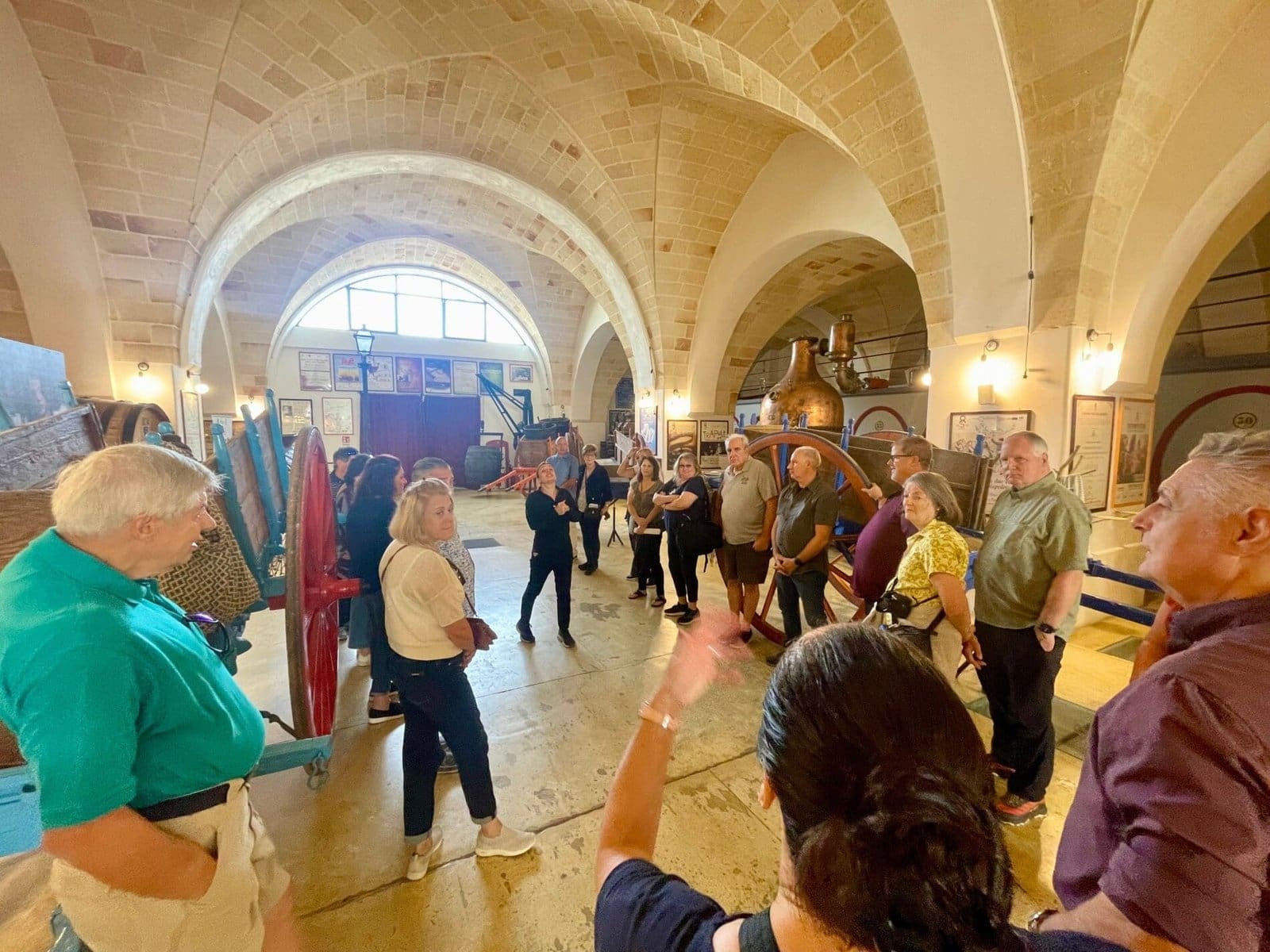
The cooperative side of regional wine is worth seeing because it broadens the picture beyond prestige estates. Produttori di Manduria gives us one concrete example of how Fiano appears in southern Puglia today. It puts the grape in a Salento setting with a specific producer, clear winemaking approach, and explicit food context. That is more useful than turning one bottle into a rule for the whole region.
How to recognize and order Fiano in Puglia
You do not need to memorize appellation law before dinner. A few details on the list or label will get you much further:
- Find the grape name: look for Fiano rather than assuming every local white is the same style.
- Notice the geography: Salento IGP, Terra d’Otranto DOC, or another Puglian designation gives you useful context.
- Read the producer: producer style matters, especially when the regional category is broad.
- Order around the dish: tell the server what you are eating and ask whether the bottle leans fresher, fuller, more floral, or more savory.
This is the kind of wine knowledge that should make a meal easier, not more intimidating. You are not trying to pass a test. You are trying to make one better choice at the table and understand why it worked.
Why Fiano belongs in the bigger Apulia wine story
Apulia’s wine identity is much wider than one grape. Travelers who arrive thinking only about Primitivo or Negroamaro can miss how much white wine belongs beside the region’s seafood, vegetables, cheeses, and olive-oil-driven cooking. Our guide to Apulia’s lesser-known white wine grapes puts Fiano into that broader white-wine conversation.
Fiano is useful precisely because it does not need to carry the whole regional story. It adds another layer: a grape many people associate first with Campania, appearing in Puglia under its own regional designations and producer choices. That is a better way to understand Italian wine anyway—through place, producer, food, and context rather than a single shortcut.
For me, that is what makes a wine trip worth taking. You stop asking only, “What wine should I order?” and start asking, “Why does this make sense here, with this food, in this place?”
Planning a wine-and-food trip around the table
Knowing a grape before you arrive changes the questions you ask. You can recognize Fiano on a list and compare a Salento IGP bottling with a protected Puglian designation. You can also understand why a server may point you toward it when seafood comes to the table. That is a small piece of knowledge, but it makes the experience more active and more personal.
If you want to explore those connections in the region itself, see our Apulia wine and gastronomy journey. The goal is not to collect famous labels. It is to understand how the wines, producers, meals, and places fit together.
FAQ: Fiano and Puglia wine travel
Are Apulia and Puglia the same place? Yes. Puglia is the Italian name for the region and Apulia is the English name. Wine labels and Italian sources will usually use Puglia or a more specific geographic designation.
Is Fiano only from Campania? No. Fiano di Avellino is a famous Campania expression, but Puglian rules also recognize Fiano. Terra d’Otranto DOC, for example, has a varietal Fiano category, and Salento IGP producers bottle Fiano as well.
What does Salento IGP on a Fiano label tell me? It tells you the wine is identified with the Salento geographic indication. It does not tell you that every Salento Fiano will taste identical, so the producer, vintage, and winemaking choices still matter.
Inspired to travel deeper?
Explore the private wine, food, and producer-led journeys behind the stories on VIP Winery Vacations.
View Apulia


