Receive Exclusive Info on Our Authentic, Chef-Led Journeys.
Marcus or Jamie Will Personally Share More Tour Details.
Honored with Top Industry Awards
Chef Marcus Guiliano – Chef on a Mission
Italy is only slightly larger than Arizona, yet it contains twenty distinct nations. Each has its own dialect, its own protected ingredients, and its own rules. Travel a hundred miles in any direction and everything shifts. The language changes. The wine changes. Even the fat in the pan changes—from the butter of the north to the olive oil of the south.
When you look at a standard Italy wine regions map, you might just see borders. But a chef sees soil types, microclimates, and centuries of stubborn tradition.
This is why a real Italy wine tour for foodies never tries to do everything. It chooses depth over distance. It understands that you cannot understand Barolo without the white truffle of Alba, and you cannot understand Primitivo without the heat of the Pugliese sun.
In this guide, we are going to break down the peninsula not by tourist attractions, but by terroir. We will explore how the land shapes the food, and why the wine exists solely to serve that food.
Welcome to the table.
Defining the Terroir: Why Food Leads and Wine Follows
In America, we often pick a wine we like and then wonder what to eat with it. In Italy, this is backwards.
Italian wine was never designed to be drunk in a tasting room. It was designed to be an ingredient on the table, just as essential as the salt or the bread. This is the golden rule of Italian food and wine pairings: If it grows together, it goes together.
This isn’t just a rhyme; it is agricultural logic. The same soil (terroir) that feeds the vines also feeds the wheat, the olive trees, and the grazing livestock.
What Determines Italian Wine Styles?
The character of a region’s wine is dictated by two things: the climate and the local fat.
The Climate: Cool Alpine air in the north produces grapes with higher acidity and thinner skins (like Nebbiolo). The scorching sun of the south produces sugar-rich grapes with higher alcohol and thicker skins (like Primitivo).
The Fat: This is the chef’s secret. The structure of the wine always mirrors the cooking fat of the region.
“When I’m in Piedmont, I’m cooking with butter and roasting meat. I need a wine with aggressive tannins, like Barolo, to scour that animal fat off the palate. But when I’m in Puglia, cooking vegetables in olive oil, I don’t need tannins. I need the ripe, generous fruit of a Negroamaro to complement the sweetness of the oil. The wine is the final seasoning.“
– Chef Marcus
Understanding this relationship is the key to unlocking the map. You don’t need to memorize 500 grape varieties. You just need to know what the locals eat.
Northern Italy: The Land of Butter and Fog
If you look at the Italy wine regions map, the north is defined by one massive geographic feature: The Alps. These mountains act as a refrigerator, trapping cold air and creating the fog (nebbia) that gives the noble Nebbiolo grape its name.
The cuisine here is not what most Americans think of as “Italian.” There is very little olive oil. Instead, there is butter. There is very little dry pasta. Instead, there is rich egg dough, rice, and polenta. The food is built to sustain you through cold winters, and the wines are built to cut through that richness.
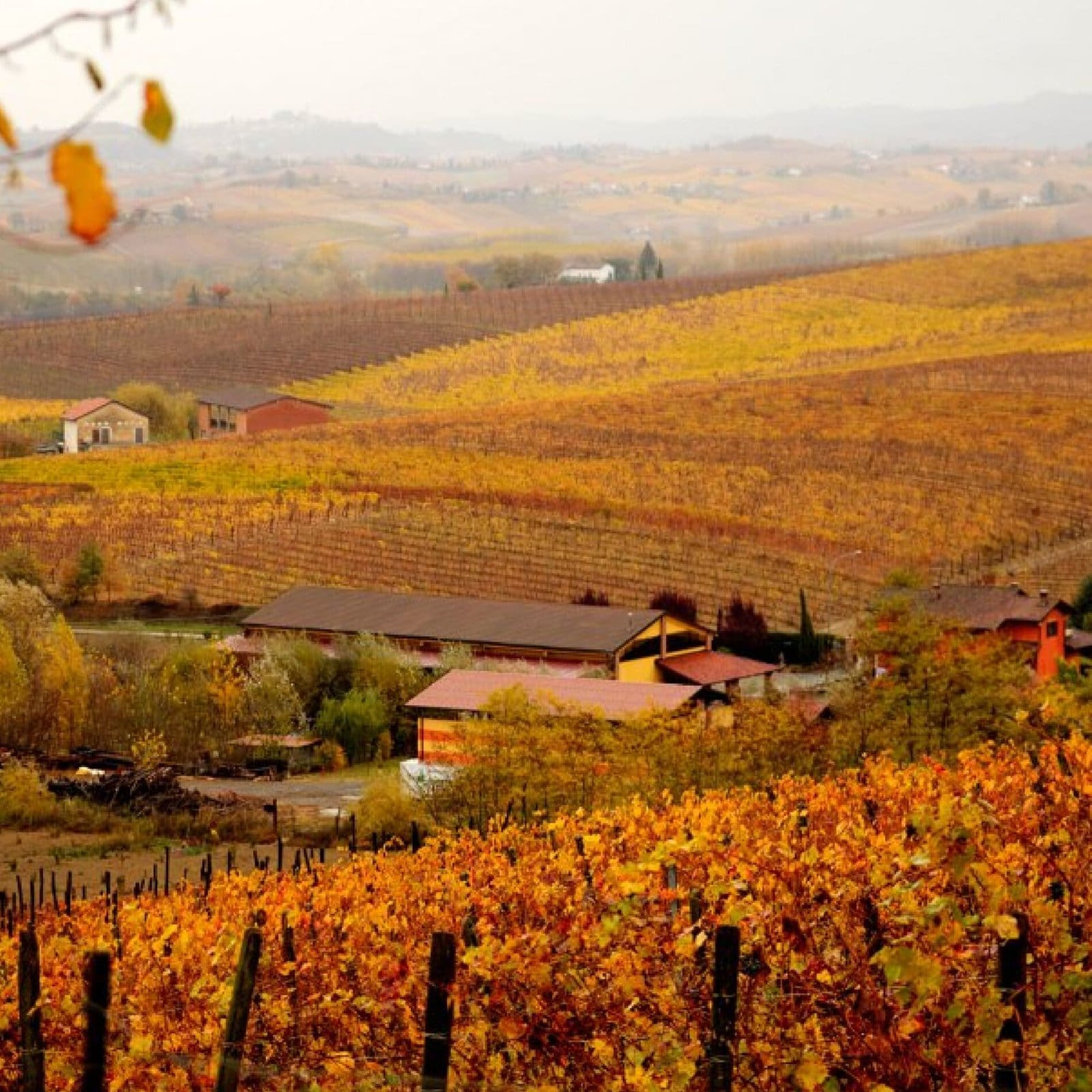
Piedmont: The King of the Table
Piedmont is the spiritual home of the Slow Food movement, which began here in the 1980s as a protest against fast food culture. It is a region that demands patience.
The cuisine is aristocratic and earthy. We are talking about Brasato al Barolo (beef braised in wine), Traditional Piedmontese Tajarin (famous for using up to 40 egg yolks), and the white truffle of Alba—a tuber so aromatic it feels illegal.
The Wine: Barolo and Barbaresco (both made from Nebbiolo) are the heavy hitters. They are high in acid and tannins.
The Perfect Pairing: Alone, a young Barolo can feel like chewing on a tea bag. But pair it with a rich, butter-heavy truffle pasta? The tannins bind to the proteins and fats, scrubbing your palate clean. It is a mechanical necessity.
Lombardy & Veneto: Rice, Bubbles, and Power
Moving east, the conversation shifts from mountains to plains.
Lombardy: This is the land of rice. Risotto alla Milanese, yellow with saffron and thick with marrow, requires a wine that can lift that weight without overpowering it. Enter Franciacorta, Italy’s answer to Champagne. Its yeasty, brioche notes mirror the creaminess of the rice perfectly.
Veneto: Here, you find one of the world’s most unique wines: Amarone. It is made from grapes that are dried on mats for months, concentrating their sugars and flavors into a raisin-like intensity. It is a massive wine. You don’t drink this with salad. You drink it with aged cheese or game meat—something with enough “funk” to stand up to the power in the glass.
Central Italy: The Heart of Oil & Wheat
Cross the Apennines and the butter disappears. In Central Italy, the holy trinity takes over: Wheat, Wine, and Olive Oil.
This is the Italy of the postcard, but the reality is grittier and more delicious than the pictures suggest. The food here is based on “Cucina Povera” (peasant cooking)—simple ingredients, treated with religious respect.
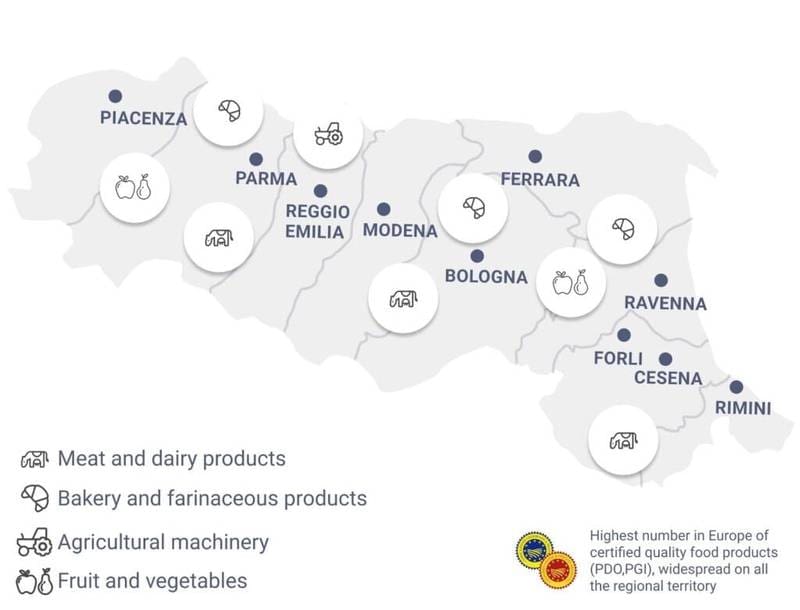
Emilia-Romagna: The Stomach of Italy
Before we hit Tuscany, we must stop in Emilia-Romagna. If you are a serious eater, this is your capital.
Source: Invest in Emilia-Romagna
The Food: This is the home of Prosciutto di Parma, Parmigiano Reggiano, and true Balsamic Vinegar. It is arguably the best place to eat on the planet.
The Wine: Forget the sugary soda you drank in college. Real Lambrusco is dry, frothy, and violet-colored. Why does it exist? To cut through the fat of a plate of Mortadella. It is a “digestive” wine in the truest sense.
Tuscany: The Icon
Tuscany is famous for its rolling hills, but at the table, it is shockingly simple. The locals are often called Mangiafagioli (bean eaters). They value unsalted bread, grilled meat, and beans swimming in green olive oil.
Chianti Classico: This is the partner for Bistecca alla Fiorentina. The steak is rare and salty; the Sangiovese grape is tart and savory. The acidity of the wine slices through the marbling of the steak like a knife.
The Super Tuscan Confusion: You will hear about “Super Tuscans.” These are wines made with French grapes (Cabernet, Merlot) instead of the local Sangiovese. They are polished, powerful, and expensive. Are they delicious? Absolutely. Are they traditionally Tuscan? No. If you want the real experience, stick to the Classico.
The Unsung Heroes: Umbria & Lazio
Umbria: Tuscany’s wilder sister. Here, the wines are darker and denser. Sagrantino di Montefalco is a massive red wine with tannins that can dry your mouth out in seconds. It needs the hearty wild boar ragu of the region to tame it.
Lazio (Rome): Roman food is aggressive. Carbonara, Amatriciana, Cacio e pepe. These are heavy, salty pasta dishes dominated by Pecorino cheese and cured pork cheek (Guanciale).
The Pairing: You don’t drink big red wines with Carbonara. You drink Frascati—a crisp, mineral white wine grown in the volcanic hills just outside the city. It acts as a palate cleanser, washing away the egg and cheese so you can take another bite.
Southern Italy & The Islands: Sun, Volcanoes, and Sea
When you cross into the South, the volume gets turned up. The sun is brighter, the tomatoes are sharper, and the flavors are louder.
This is the land of Durum wheat and olive oil. If the North is about “preserving” against the cold, the South is about celebrating the sun. The wines here don’t just have fruit; they have heat.
Campania & Basilicata: The Volcanic Table
Here, the soil is alive. Thanks to Mount Vesuvius and Mount Vulture, the ground is rich in ash and minerals.
The Food: You cannot talk about Campania without talking about Pizza Napoletana and Mozzarella di Bufala. The mozzarella here is not the rubbery white ball you buy at the supermarket. It is a fresh, weeping cheese that tastes like milk and musk.
The Wine: The volcanic soil creates wines of incredible longevity. Aglianico (specifically Taurasi) is often called the “Barolo of the South.” It is savory, smoky, and tannic.
The Pairing: A wood-fired pizza with simple tomato sauce and buffalo mozzarella needs acidity to cut the creaminess. A local Aglianico or a crisp Falanghina handles this effortlessly.
Puglia: The Roots of the Chef
This region is personal. It is my family’s home, and it is the spiritual capital of Cucina Povera (the kitchen of the poor).
The Philosophy: In Puglia, we don’t hide the ingredients with sauces. We highlight them. The cuisine is 80% vegetables—fava beans, chicory, eggplants—drowned in the best olive oil in the world.
The Wine: The heat here is intense, so the grapes develop thick skins to protect themselves. This gives us Primitivo (the cousin of Zinfandel) and Negroamaro.
“People think Primitivo is just a ‘jammy’ fruit bomb. But when you drink it in Puglia with a plate of ‘Orecchiette con Cime di Rapa’ (pasta with bitter broccoli rabe), the sweetness of the wine perfectly balances the bitterness of the greens. It’s a balancing act that only works if you understand the local palate.”
– Chef Marcus
Sicily & Sardinia: The Continents
To call these “regions” is an insult. They are their own universes.
Sicily: The most conquered island in the Mediterranean. You taste the history: Arab citrus, Spanish chocolate, Greek olives. The wines from Mount Etna are the current darlings of the wine world—smoky, mineral-driven reds that drink like Pinot Noir on fire.
Sardinia: Wild, rugged, and isolated. This is sheep country. Pecorino Sardo is sharper and saltier than its Roman cousin. The wine, Cannonau (Grenache), is rich in antioxidants and linked to the island’s incredible longevity. You drink it with Porceddu (roast suckling pig) and you understand why the locals live to be 100.
How to Eat Like a Local: A Practical Glossary
Knowing the region is only half the battle. You also need to know where to walk in. In Italy, the sign above the door tells you exactly what kind of experience you are about to have.
Here is the cheat sheet every traveler needs to navigate the Osteria vs Trattoria confusion:
The Bar: This is not for cocktails; it is for caffeine. This is where you stand at the counter for your morning espresso and cornetto (pastry). You are in and out in five minutes.
The Enoteca: Literally a “wine repository.” Historically, these were wine shops. Today, many serve high-quality meats and cheeses to accompany the wine. If you want to taste five different Barolos by the glass without committing to a full four-course meal, go here.
The Osteria: Originally a place serving wine and simple food. Today, an Osteria is usually the most informal and rustic option. Expect short menus, local wine in carafes, and a loud, lively atmosphere.
The Trattoria: The backbone of Italian dining. Traditionally family-run, often with “Nonna” in the kitchen. The menu will feature the regional classics we discussed above. The service is casual, the portions are generous, and the prices are fair.
The Ristorante: The most formal option. White tablecloths, professional sommeliers, and often a more modern or elevated take on the cuisine.
[Chef’s Tip]
“Avoid any place with a menu translated into five languages and pictures of the food out front. Look for the handwritten chalkboard menu (only in Italian) and a line of locals waiting for a table at 8:30 PM. That is where the real food is.”
Frequently Asked Questions About Eating & Drinking in Italy
What is the difference between an Osteria and a Trattoria?
An Osteria was originally a place serving wine and simple food, and today represents the most informal, rustic option with short menus and local wine. A Trattoria is the backbone of Italian dining, traditionally family-run (‘Nonna’ in the kitchen), featuring regional classics, generous portions, and fair prices.
What is an Enoteca in Italy?
An Enoteca is literally a ‘wine repository.’ Historically wine shops, today many serve high-quality meats and cheeses to accompany wine tastings. It is the best place to taste multiple wines by the glass without committing to a full meal.
What is an Italian Bar?
In Italy, a ‘Bar’ is primarily for coffee and breakfast, not cocktails. It is where locals stand at the counter for a quick morning espresso and pastry.
Experience the Real Italy
Italy does not reveal itself all at once. It reveals itself over time, with patience, curiosity, and a very good glass of wine.
You can visit Italy with a checklist, running from the Colosseum to the Vatican to the Leaning Tower. Or, you can visit Italy with an appetite.
When you stop treating the country as a monolith and start exploring the Italy wine regions map province by province, the experience changes. You stop being a tourist and start being a guest.
If you are looking for the best Italy wine tour for foodies, look for one that respects this diversity. Look for authentic Italian food and wine travel that puts you at the table with the winemakers and the farmers, not just the tour guides.
At VIP Winery Vacations, this is the only way we travel. We don’t just show you Italy; we let you taste it, one region at a time.