
What to Eat in Campania Besides Pizza: A Food Lover’s Guide
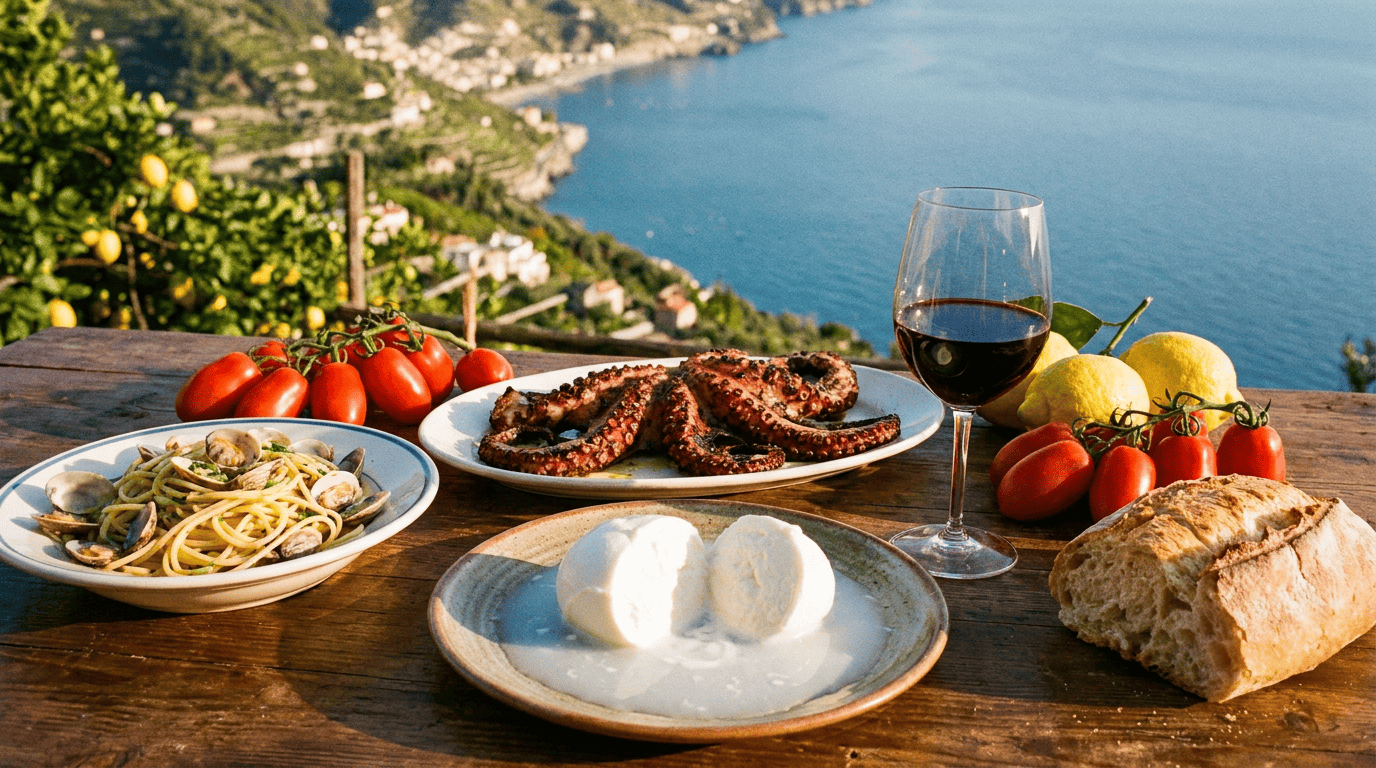
Everyone Comes to Campania for Pizza… And they should. After all, Naples is the birthplace of pizza. Watching a pizzaiolo stretch dough by hand, top it with San Marzano tomatoes, fresh mozzarella, and basil before sliding it into a blazing wood-fired oven is an unforgettable experience.
But here’s the mistake most travelers make. They spend their entire vacation chasing pizza. One famous pizzeria after another, one Instagram post after another, one line after another.
Meanwhile, they’re missing one of the richest culinary regions in all of Italy. Campania isn’t just the home of pizza. It’s home to one of Europe’s greatest food cultures. Fresh seafood hauled in every morning. Buffalo mozzarella made just minutes before you eat it. Ancient pasta traditions. Mountain cheeses. Black truffles. Hazelnuts. Chestnuts. Extra virgin olive oils. Protected tomatoes. Centuries-old winemaking.
After years of exploring Italy, and leading culinary adventures there, I’ve learned one thing: If you only eat pizza in Campania, you’ve barely scratched the surface.
Besides Pizza, What Else Should You Eat in Campania? 40+ Foods Worth Traveling For
Everybody goes to Naples looking for pizza. The hunt is on. People research the oldest pizzerias, argue about crust, tomatoes, fermentation, oven temperature, char, and which place makes the most authentic Neapolitan pie. They stand in line, take pictures, and eat pizza several times during the same trip because they are in the birthplace of pizza and feel like they need to make the most of it.
I understand. You absolutely should eat pizza in Naples. But here is the problem. Pizza can become a distraction from the rest of Campania. When we lead a nine-day food and wine journey through Italy, we generally choose one serious pizzeria and make that meal count. Then we move on. Because every time you repeat the same dish, you give up an opportunity to discover another part of the region.
If you eat pizza four times during a trip, that is four meals when you could have eaten fresh octopus, spaghetti with clams, slow-cooked Neapolitan Genovese, pasta and potatoes with smoked provola, local salumi, mountain cheeses, black truffles, hazelnuts, chestnuts, mussels, anchovies, or fish pulled from the water that morning.
Campania is not one flat culinary destination. It stretches from Naples and the islands across the Amalfi and Cilento coasts, through the buffalo country of Caserta and Salerno, and into the vineyards, forests, and mountain villages of Irpinia. The food in Campania Italy shifts with every mile. Along the coast, the table smells like saltwater, garlic, lemons, olive oil, and fish coming off the boats. Around Caserta and Paestum, buffalo milk becomes mozzarella, ricotta, provola, yogurt, and gelato. In the mountains of Avellino, the cuisine shifts toward mushrooms, truffles, chestnuts, hazelnuts, lamb, pork, salumi, aged cheeses, soups, and substantial handmade pasta.
That variety is not marketing. It is the reality of Campania. So what should you eat in Campania besides pizza? A lot.
Start With the Seafood of Naples and the Campanian Coast
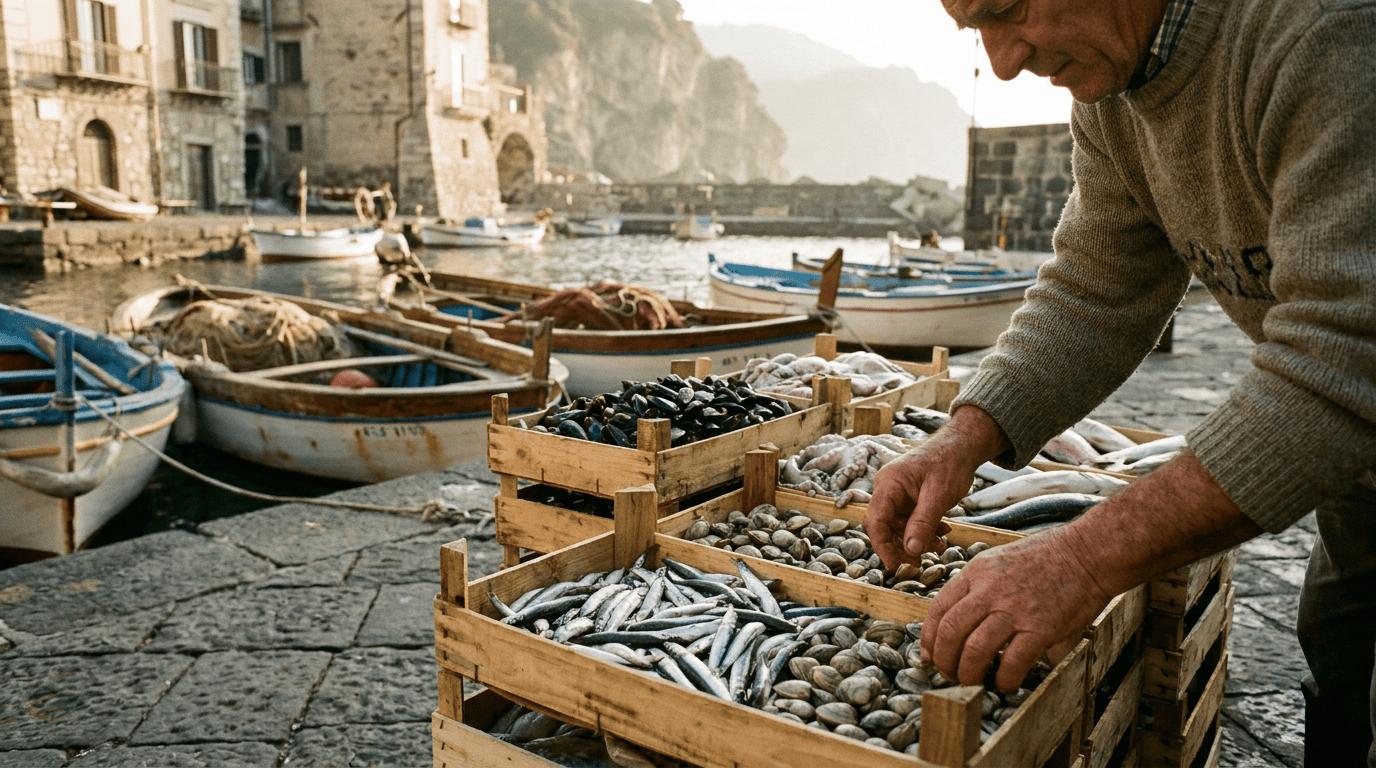
Picture the coast early in the morning.
Small fishing boats return to the harbor.
Crates fill with glistening anchovies, clams, mussels, octopus, squid, whole fish, shrimp, and whatever else came in that day.
Restaurant owners inspect the catch before most tourists finish their first coffee.
That is the Campania you want to eat.
The best coastal cooking is not about building the largest seafood tower or covering everything in sauce.
It is about restraint.
Fresh fish. Good olive oil. Garlic used with purpose. Acidity from lemon or tomato. Salt. Heat. Timing.
When the ingredients are right, complication becomes the enemy.
Key takeaway: The best coastal cooking in Campania is about restraint. Fresh fish, good olive oil, garlic used with purpose, acidity from lemon or tomato, salt, heat, and timing. When the ingredients are right, complication becomes the enemy. This is the same sourcing philosophy we apply on every VIP culinary journey, where we follow the catch from harbor to plate.
Spaghetti alle Vongole
Spaghetti alle vongole should be near the top of your list. At its best, it is disciplined food: clams, pasta, extra virgin olive oil, garlic, parsley, and enough pasta water to bring the sauce together. Some cooks include white wine, some add a few tomatoes. The dish does not need cream, excessive butter, or a mountain of grated cheese. The clams should taste like the sea, and the pasta should taste like the clams. That simplicity is the point. A weak version tastes like plain pasta with shellfish sitting on top. A great version tastes like the entire plate has been built around the liquid released by the clams. That is the difference between adding seafood to pasta and actually cooking the two together.
Polpo alla Luciana
Polpo alla Luciana is octopus slowly cooked until tender, commonly with tomatoes, garlic, olives, capers, parsley, or chile, depending on the cook. This is not the rubbery octopus that makes people think they dislike octopus. Properly cooked polpo should have tenderness, texture, and a deep ocean flavor that works beautifully with tomatoes and olive oil. The dish is associated with the fishing community of Santa Lucia in Naples, but octopus appears in many forms across Campania. You may find it grilled, marinated, sliced into seafood salad, served warm with potatoes, or cooked slowly in tomato sauce. When you are this close to the water, order it.
Calamari, Totani, and the Cuoppo di Mare
Calamari gets most of the attention in the United States, but pay attention to totani, a related cephalopod that appears frequently in Campanian cooking. Look for totani e patate, a satisfying coastal dish of squid and potatoes cooked together until their flavors merge. It is especially associated with communities along the Amalfi Coast. Then there is the cuoppo di mare, a paper cone filled with freshly fried seafood. Depending on the catch and the restaurant, it may contain calamari, shrimp, anchovies, and small fish. A good cuoppo should arrive hot, crisp, and lightly salted. It should not be buried under thick batter or drip with old frying oil. A squeeze of local lemon is usually all it needs. Street food does not have to mean careless food. When it is done properly, a cuoppo is one of the best ways to taste the catch in a casual setting.
Impepata di Cozze and Zuppa di Cozze
Campania takes mussels seriously. Impepata di cozze is one of the simplest preparations: mussels opened with black pepper, and they may include garlic, parsley, or lemon. The broth collecting at the bottom is part of the experience — you want bread, you want to soak up everything. Zuppa di cozze is generally more substantial. Versions may include tomatoes, octopus, other shellfish, toasted bread, and a spicy condiment. Do not let the word zuppa make you picture a neat bowl of American-style soup. This can be a crowded, messy, hands-on plate of seafood with broth underneath it. That is part of the point.
Alici: Anchovies That Change Your Understanding of Anchovies
Fresh anchovies in Campania are nothing like the aggressively salty fillets many Americans know from cheap cans. Look for alici marinate, anchovies cured with vinegar or citrus and dressed with olive oil, garlic, and herbs. In Cilento, you may encounter alici ‘mbuttunate, anchovies opened, stuffed, breaded, and fried or cooked in tomato sauce. The filling may include breadcrumbs, egg, parsley, and local cheese. Then there is one of Campania’s most distinctive ingredients: Colatura di Alici di Cetara DOP. Colatura is an amber-colored liquid produced as salted anchovies mature under pressure. In Cetara, anchovies are traditionally layered with salt inside small wooden barrels called terzigni. The concentrated liquid is collected, matured, and filtered. The result is intensely savory, salty, and packed with umami. A small amount can season an entire plate of spaghetti. If you understand Southeast Asian fish sauce or the historical importance of Roman garum, colatura will make immediate sense. It is not supposed to make the pasta taste aggressively fishy. Used correctly, it makes everything taste more complete.
Baccalà
On an Italian menu, look for the spelling baccalà. Bacalhau is the Portuguese word. Baccalà is preserved cod, not fish pulled from the Bay of Naples that morning. But preservation is part of regional cuisine, and Campania has made baccalà its own through generations of preparation. Try baccalà fritto, especially when the batter is light and the fish has been soaked properly. You may also see it prepared with tomatoes, olives, capers, potatoes, or peppers. Authentic regional cuisine is not limited to ingredients grown or caught within a few miles. It also includes ingredients that communities adopted, preserved, and transformed over centuries.
Pezzogna all’Acqua Pazza
Pezzogna is a prized local fish often prepared all’acqua pazza, or “crazy water.” The fish is gently cooked with water, tomatoes, garlic, olive oil, herbs, and sometimes white wine. It sounds almost too basic, and that is exactly why quality matters. When the fish is fresh and the tomatoes and olive oil are exceptional, the result can be extraordinary. This is Campanian cooking in one plate: Do less. Use better ingredients.
Scialatielli ai Frutti di Mare
Scialatielli are thick, short strands of fresh pasta associated with the Amalfi Coast. They are frequently served with clams, mussels, shrimp, calamari, or mixed seafood. The pasta has enough body to carry a serious seafood sauce without disappearing underneath it. Along with spaghetti alle vongole, this is one of the dishes I actively search for when eating along the coast.
Spaghetti alla Nerano
Spaghetti alla Nerano proves that coastal Campania is not only about seafood. This pasta combines zucchini, cheese, basil, and pasta water to create an unexpectedly creamy sauce without becoming an American-style cream pasta. The cheese varies by cook, although Provolone del Monaco is a prized local choice. This is humble food that becomes memorable when the zucchini are flavorful and the cook understands texture. The dish is a perfect example of how Campanian cooks turn a few ordinary ingredients into something greater than the sum of its parts.
Naples Is Also One of Italy’s Great Pasta Cities
People talk about Naples as a pizza city. It is also one of Italy’s great pasta and slow-cooked sauce cities. These are not always delicate dishes. Some are rich, dense, and deeply comforting. They reflect household cooking, Sunday meals, frugality, patience, and the ability to make inexpensive ingredients taste substantial. That variety is the reality of Neapolitan cuisine.
Key takeaway: Naples is not only a pizza city. It is one of Italy's great pasta and slow-cooked sauce cities, where dishes like Genovese, ragù napoletano, and pasta e patate reflect Sunday meals, frugality, patience, and the ability to make inexpensive ingredients taste substantial. If you order only pizza here, you miss half the city's culinary identity.
Ragù Napoletano
Neapolitan ragù is not Bolognese sauce. Large pieces of meat cook slowly in tomatoes for hours. The sauce dresses the pasta, and the meat may be served separately as another course. A real ragù has depth because time has done the work. It should not taste like ground beef thrown into tomato sauce thirty minutes before dinner. This is Sunday food. It is food that tells you somebody woke up early.
Genovese Napoletana
Despite its name, la Genovese is one of Naples’ defining pasta sauces. The foundation is an enormous quantity of onions slowly cooked with meat until the onions collapse into a concentrated, almost creamy sauce. The finished dish can be sweet, savory, and intensely beefy without relying on tomatoes. For travelers who assume every Southern Italian pasta sauce must be red, Genovese is a revelation. This is one of the first non-pizza dishes I would tell somebody to order in Naples.
Pasta e Patate con Provola
Pasta with potatoes sounds like starch served with more starch. That is exactly why people underestimate it. Pasta e patate is a lesson in texture. The potatoes break down and release starch. Mixed pasta shapes are often used. Cheese adds smoke, salt, and richness. With provola affumicata, the dish becomes creamy and deeply aromatic without needing heavy cream. Some cooks push it further with aged Provolone del Monaco. The result should be azzeccata, cohesive, dense, and almost sticky rather than watery. This is one of those dishes that does not always photograph beautifully. It does not need to. It is about how it eats.
Pasta e Piselli
Pasta e piselli uses the same basic Campanian logic: cook the pasta directly with the other ingredients so the starch stays in the pot and becomes part of the sauce. Peas, onion, olive oil, and sometimes pancetta or pork create a dish that sits somewhere between pasta and a thick soup. This is home cooking. It is exactly the kind of dish travelers miss when they eat only at restaurants built for tourists.
Scarpariello
Scarpariello is a fast, flavorful pasta traditionally associated with tomatoes, garlic, cheese, basil, and peperoncino. Unlike ragù, it is not an all-day project. Its appeal comes from immediacy: tomato, cheese, heat, fresh herbs, and balance. This is the kind of pasta that reminds you a dish does not need fifteen ingredients to feel complete.
Frittata di Maccheroni
Frittata di maccheroni is one of Italy’s smartest answers to leftover pasta. Cooked pasta is mixed with eggs and often cheese, then fried or baked until it holds together in a firm, sliceable round. It can be served warm, at room temperature, or packed for a picnic. Variations may include salumi, vegetables, or leftover sauce. This is practical food. But practical does not mean second-rate.
Sartù di Riso
Sartù di riso is a baked rice timballo that may contain meatballs, peas, cheese, eggs, mushrooms, ragù, and other fillings. It is elaborate, celebratory food — the opposite of a quick bowl of spaghetti. When unmolded, it should stand like a savory cake. Cut into it and the interior reveals the filling. This is food with ceremony.
Gattò di Patate
Gattò di patate is a baked potato dish enriched with cheese, eggs, and salumi. The name comes from the French gâteau, but the dish is completely embedded in Neapolitan cooking. A well-made gattò should have a browned top, a soft interior, and pockets of melted cheese and cured meat. It is hearty, comforting, and especially satisfying in cooler weather.
Minestra Maritata
Minestra maritata is often translated as “wedding soup,” but the marriage refers to the combination of greens and meat, not necessarily a wedding ceremony. The exact greens and meats vary. You may find escarole, chicory, cabbage, or other leafy vegetables combined with pork, beef, sausage, or broth. This dish matters because it breaks the stereotype that Campanian food is only pasta, tomatoes, and cheese.
Salsiccia e Friarielli
Friarielli are slightly bitter greens closely related to broccoli rabe. Pair them with sausage, garlic, olive oil, and peperoncino and you have one of Campania’s great combinations. You may see salsiccia e friarielli served as a main course, inside bread, even on pizza. But you do not need pizza underneath it to understand why the combination works. The richness of the pork needs the bitterness of the greens.
Parmigiana di Melanzane
Several regions claim a relationship with eggplant parmigiana. Those arguments are not going away. What matters to the traveler is that parmigiana di melanzane is deeply established in Campanian cooking. Eggplant, tomato, basil, cheese, and careful layering can create something rich without becoming heavy or greasy. Unfortunately, bad versions are common. When the eggplant has absorbed poor frying oil and the plate is buried under mediocre cheese, the dish loses its purpose. A good parmigiana still tastes like eggplant.
Zucchine alla Scapece
Zucchine alla scapece are fried or sautéed zucchini dressed with vinegar, mint, garlic, and olive oil. The acidity cuts through the richness of a larger meal. The mint gives the dish a freshness that surprises people who expect every Southern Italian vegetable to be cooked with tomatoes.
Crocchè and Frittatine di Pasta
Do not overlook Neapolitan street food. Crocchè are potato croquettes, often containing cheese and herbs. Frittatine di pasta are compact portions of pasta, béchamel, cheese, peas, meat, or other ingredients that are breaded and fried. These are not foods I would eat every day. But they reveal the Neapolitan talent for turning leftovers and inexpensive ingredients into something people actively crave.
Buffalo Country: Mozzarella, Ricotta, Provola, and One of My Defining Campania Memories
One of my strongest food memories in Campania happened in the province of Caserta. Jamie and I were visiting our friends at Vestini Campagnano, a winery known for helping revive the native Pallagrello and Casavecchia grapes in northern Campania. Our friend Beniamino took us out for lunch where we ate a simple toast covered with freshly shaved truffles. Nothing was hidden, no unnecessary garnish, no complicated sauce competing with the truffles. That dish alone surprised me.
Then we stopped at what I can only describe as the buffalo mozzarella equivalent of a roadside ice cream stand. They were making the mozzarella right there.
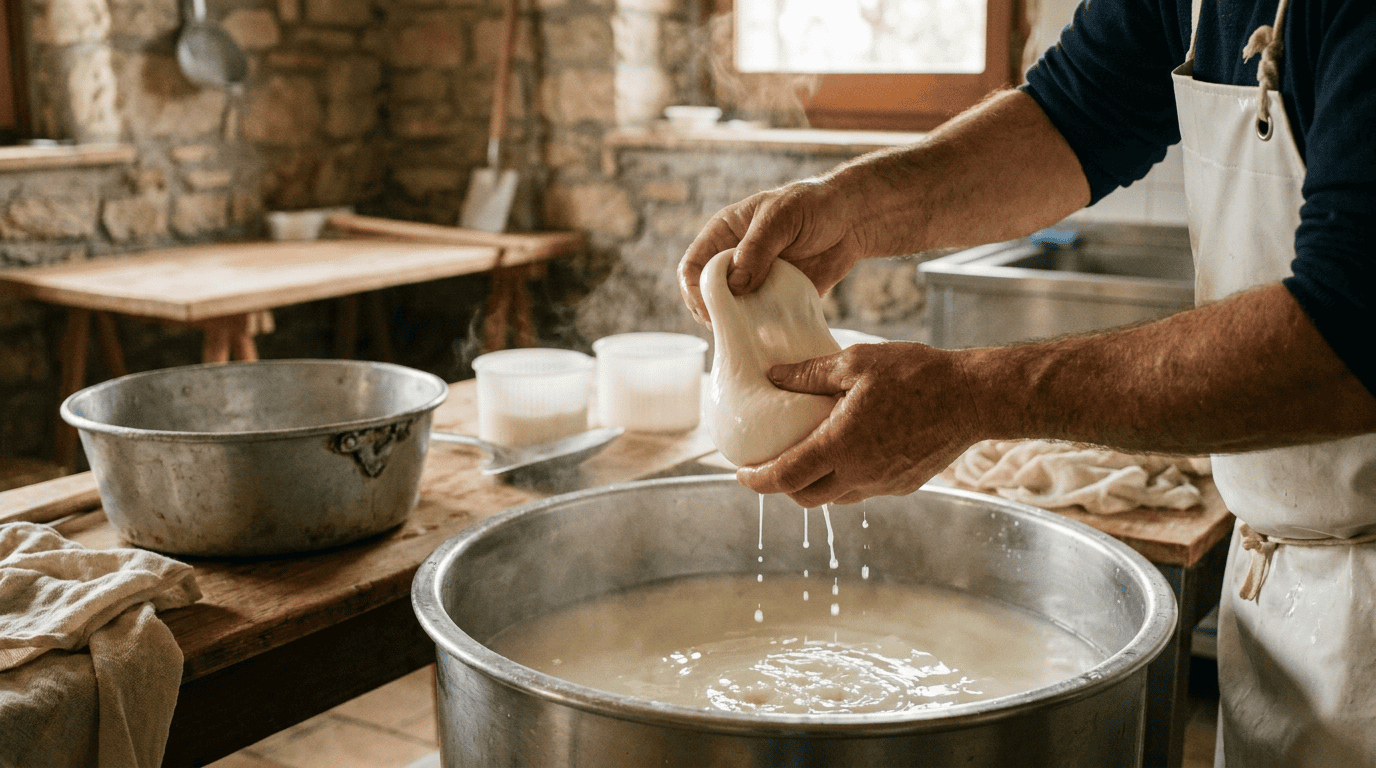
The cheese was still moving through its liquid. Someone grabbed it, sliced it, added a little finishing salt, and put it on something as simple as a paper plate. The milk and whey ran everywhere. It was warm, soft, tangy, and completely alive. Right afterward, at the same place, we had gelato made with buffalo milk. The richness was different from ordinary cow’s-milk gelato. It had creaminess, but it also had a clean tang that kept it from feeling flat. That entire stop, the warm mozzarella followed by buffalo-milk gelato, was more memorable than most formal restaurant meals.
I had already been serving authentic buffalo mozzarella at Aroma Thyme Bistro since 2004. I thought I understood it. That experience showed me I still had more to learn.
For a deeper dive into the production process and DOP protections, read my full guide to What Is Mozzarella di Bufala and Why It Matters in Campania.
Key takeaway: The defining food memory of Campania is not a restaurant meal. It is warm buffalo mozzarella eaten moments after it was made, still releasing milk across a paper plate, followed by buffalo-milk gelato. Freshness is everything. Mozzarella di Bufala Campana DOP does not need roasted peppers, balsamic glaze, or out-of-season tomatoes. A little salt may be enough.
Mozzarella di Bufala Campana DOP
Real Mozzarella di Bufala Campana DOP is made from the milk of Italian Mediterranean buffalo within a protected production zone. Freshness matters enormously. Even excellent mozzarella changes as it travels and sits in refrigeration. Eating it close to where it was made allows you to experience the texture, temperature, acidity, aroma, and flow of the milk in a way most Americans never encounter. The cheese does not need roasted peppers, cheap balsamic glaze, out-of-season tomatoes, or a pile of garnish. A little salt may be enough. Maybe exceptional olive oil. Maybe a perfectly ripe tomato when tomatoes are truly in season. That is it.
For years, I served buffalo mozzarella with roasted tomatoes. People liked it. I thought I was enhancing the dish. Then I tasted mozzarella in Campania and realized the roasted tomatoes were too strong. The concentrated sweetness and acidity overwhelmed the delicate milk. That experience changed the way I approached the plate. Sometimes becoming a better chef means knowing what to remove.
Ricotta di Bufala Campana DOP
Do not stop with mozzarella. Ricotta di Bufala Campana DOP has a creamy texture and a distinctly milky aroma tied to buffalo milk and the whey left from mozzarella production. Try it fresh. Spoon it onto bread. Use it in pasta. Eat it in desserts. Or serve it with olive oil and salt. A good ricotta should not feel dry or chalky. It should taste fresh, clean, and full of milk.
Provola Affumicata
Smoked provola is one of the flavors that gives Campanian cooking its identity. It melts beautifully into pasta e patate, baked pasta, vegetables, and sandwiches. The smoke should add complexity. It should not make the cheese taste like an ashtray. That sounds obvious. It is not always obvious to the producer.
Provolone del Monaco DOP
Provolone del Monaco is a raw-milk, aged pasta-filata cheese from the Sorrento Peninsula and Monti Lattari. The production tradition is tied in part to local Agerolese cattle. The cheese is aged for at least six months and develops more spice and intensity as it matures. Eat it by itself, shave it over pasta, or look for it in spaghetti alla Nerano or more ambitious versions of pasta e patate.
Keep the Regional Story Straight
This is where precision matters. Burrata and its stracciatella filling belong to Puglia’s story, especially Burrata di Andria IGP. A Campanian dairy may make burrata today, but that does not change the food’s regional roots. In Campania, concentrate on Mozzarella di Bufala Campana, buffalo ricotta, provola affumicata, fiordilatte, Provolone del Monaco, caciocavallo, and the region’s local pecorini. Italy is regional. Treating every Italian cheese as though it belongs everywhere destroys the very story travelers came to experience.
Inland Campania: Truffles, Hazelnuts, Chestnuts, Salumi, and Mountain Cheese
One of my biggest surprises in Campania was discovering ingredients I had mentally associated with Northern Italy. I have been to Piemonte many times. When I think about Piemonte, I think about truffles and hazelnuts. Then I traveled south and found those ingredients in Campania. That shook up my assumptions in a good way. The truffle toast with Beniamino was in northern Caserta, not Irpinia. That geographic distinction matters. But the experience opened my eyes to the broader inland cuisine of Campania. Once you move away from Naples and the coast, the table changes.
Key takeaway: Inland Campania reveals ingredients most travelers associate with Northern Italy: black truffles, hazelnuts, chestnuts, mountain cheeses, and cured meats. The food shifts from seafood and tomatoes to mushrooms, lamb, pork, substantial handmade pasta, and aged pecorino. This is Campania's second culinary identity, and most visitors never see it.
What to Eat in Irpinia
Irpinia, centered largely in the province of Avellino, is mountain and hill country. Here you should look for mushrooms, truffles, chestnuts, hazelnuts, lamb, pork, substantial handmade pasta, soups, cured meats, and aged cheeses. The area around Bagnoli Irpino is especially associated with the black truffle known as tartufo nero di Bagnoli Irpino. Porcini and other wild mushrooms appear when the season is right. Do not expect every restaurant to shave truffles over everything all year. Ask what is local, ask what is in season. Fresh truffles should have aroma. If the dish smells mostly like synthetic truffle oil, that is not the experience you traveled for.
Hazelnuts in Avellino
Yes, Avellino has a serious hazelnut tradition. Regional varieties include Mortarella, Tonda di Avellino, Camponica, and San Giovanni. Hazelnuts are grown near communities including Serino, Altavilla, Capriglia, and Montefredane. That does not mean every Campanian hazelnut is called Nocciola di Giffoni. Nocciola di Giffoni IGP belongs to a protected production zone in the province of Salerno, particularly around the Irno Valley and Monti Picentini. The protected variety is the round Tonda di Giffoni, prized for roasting, peeling, and pastry work. Look for hazelnuts in cakes, torrone, chocolate, gelato, pastry creams, cookies, and savory preparations.
Castagna di Montella IGP
Irpinia is also serious chestnut country. Castagna di Montella IGP is produced mainly from the Palummina variety, with a smaller permitted amount of Verdole. You may encounter these chestnuts roasted, dried, transformed into flour, incorporated into soups, served with meat, or used in pastries and preserves. One local preparation worth knowing is castagna del prete, in which chestnuts are dried, toasted, and later rehydrated. The process creates a dark color and concentrated, almost caramelized character. Also watch for Marrone or Castagna di Serino IGP, another protected chestnut from the Avellino area.
Pecorino di Carmasciano
Pecorino di Carmasciano is one of Irpinia’s most distinctive traditional cheeses. It comes from a small zone around Rocca San Felice and Guardia Lombardi near the Mefite of the Ansanto Valley, an area known for natural sulfurous emissions. Local tradition connects that unusual environment and the surrounding pastures to the cheese’s character. The cheese is made artisanally from sheep’s milk and commonly aged for several months. It develops a firm, crumbly texture and increasingly intense flavor. It is a recognized traditional product rather than a DOP or IGP cheese. Try it with local honey, chestnuts, salumi, or a glass of Taurasi.
Other Irpinian Cheeses to Look For
Irpinia’s traditional cheese vocabulary may include caciocavallo irpino di grotta, pecorino bagnolese, scamorza di Montella, ricotta manteca di Montella, and cheeses made from the milk of Laticauda sheep. Do not expect every meaningful product to carry a European DOP or IGP seal. Traditional regional registers preserve foods that matter geographically and culturally even when they are not part of the formal European certification system.
Salumi of Inland Campania
Move inland and you begin seeing more cured meat. Look for soppressata irpina, prosciutto di Venticano, prosciutto di Trevico, capicollo di Zungoli, salame di Mugnano del Cardinale, salame Napoli, salsiccia affumicata, and salsiccia sotto sugna. Not every one of these is DOP or IGP. They belong to Campania’s traditional-product culture. Salame Napoli, despite the name, has long been produced across Campania. It is traditionally made from selected pork cuts, seasoned, stuffed into natural casing, and often given a period of smoking before aging. A plate of local salumi with pecorino, caciocavallo, olives, and bread can tell you as much about inland Campania as an elaborate tasting menu.
Handmade Pasta of Avellino and Irpinia
Search for maccaronara, a thick, square-profile handmade pasta that may be served with tomato sauce, ragù, beans, or mushrooms. Also look for fusilli avellinesi, traditionally shaped by rolling dough around a thin rod. You may also encounter local cavatelli, ravioli, and other fresh pasta. These heavier shapes make sense with the sauces of the interior. They can carry pork ragù, lamb, mushrooms, beans, and aged cheese without collapsing.
Drink the Wines of the Mountains
The food of Irpinia belongs beside the wines of Irpinia. Fiano di Avellino, Greco di Tufo, and Taurasi are three of Campania’s four DOCG wines. Fiano and Greco can work beautifully with cheeses, vegetables, fish, and mushrooms. Taurasi, based on Aglianico, belongs with lamb, pork, ragù, salumi, and aged pecorino. You are in Campania. Drink Campanian wine. You can order California wine when you get back to the United States.
For the full story on Campania’s native grapes and the producers who grow them, read my Campania Wine: Native Grapes, Trusted Producers, and Travel.
Do Not Ignore Cilento
Cilento lies south of Salerno and offers another side of Campanian food. This is a landscape of coast, hills, olive groves, farms, and villages closely connected with the modern story of the Mediterranean diet. Look for lagane e ceci, fusillo di Felitto, alici ‘mbuttunate, local goat and sheep cheeses, soppressata di Gioi, and mozzarella nella mortella, which is traditionally wrapped in myrtle branches. Other names worth knowing include cacioricotta del Cilento, ceci di Cicerale, olive salella ammaccate, Fico Bianco del Cilento DOP, and Carciofo di Paestum IGP. This is the larger lesson: do not call every experience near Naples “Neapolitan.” Cilento has its own products, traditions, and identity.
San Marzano Tomatoes: Famous, Protected, and Genuinely Limited
San Marzano tomatoes deserve their reputation. They also suffer from some of the most confusing labeling in Italian food. The full protected name is Pomodoro San Marzano dell’Agro Sarnese-Nocerino DOP. It is not enough to plant an elongated tomato seed and print “San Marzano” on a can. The protected product is tied to permitted plant material, a defined production zone, specific cultivation rules, processing standards, and certification. The tomatoes must be grown and processed in the authorized area. The vines are trained vertically. Harvesting is performed by hand in repeated passes as the fruit ripens. San Marzano is not merely a shape, nor merely a seed. The protected product is a combination of genetics, place, farming method, processing, and verification. Authentic cans should carry the full protected name, the European DOP symbol, and appropriate identifying information. “San Marzano style” is not the same as San Marzano DOP. Precision protects both the farmer and the consumer.
Do Not Forget Pomodorino del Piennolo del Vesuvio DOP
San Marzano is not Campania’s only important tomato. Pomodorino del Piennolo del Vesuvio DOP grows on the volcanic slopes of the Somma-Vesuvius complex. Small tomatoes are tied into large hanging clusters called piennoli and stored in ventilated rooms, which allows them to remain usable through winter. The thick skin, strong attachment to the stem, and concentrated balance of sugar and acidity give the tomato its keeping ability and assertive flavor. Use it with seafood, simple pasta, or vegetables. Dishes where you want the tomato to remain recognizable rather than disappear into a long-cooked sauce.
Pasta di Gragnano IGP
Campania does not only produce sauces. It produces one of Italy’s most respected dried pastas. Pasta di Gragnano IGP must be produced within the municipality of Gragnano using durum-wheat semolina and water from the local aquifer. Traditional bronze dies create the rough exterior that helps sauces cling to the pasta, which then undergoes controlled drying. If you are eating spaghetti alle vongole, Genovese, scarpariello, or pasta with colatura, the pasta itself matters. It needs flavor, structure, texture, and the ability to hold sauce. A weak pasta can ruin an excellent sauce.
The Lemons of Sorrento and the Amalfi Coast
Sorrento lemons are among my favorites. I buy them when I can find them. I keep a bowl near my nightstand and squeeze them fresh into water. In Campania, lemons are not merely garnish for fish. They define landscapes, desserts, beverages, sauces, and entire agricultural communities. Limone di Sorrento IGP comes from the Massese, or Ovale di Sorrento, cultivar cultivated across the Sorrento Peninsula and on Capri. The fruit is aromatic and rich in essential oils, making it valuable for fresh use, pastry, and limoncello. Limone Costa d’Amalfi IGP comes from the elongated Sfusato Amalfitano variety grown on the steep terraces of the Amalfi Coast. Taste the lemons fresh, try local granita, sorbetto, and delizia al limone. Visit a grove. Visit a limoncello producer and smell the oils released when a fresh peel is cut. The difference is in the perfume of the peel, not only the acidity of the juice.
Campania’s DOP and IGP Food Checklist
You do not need to memorize every protected product.
But you should recognize that Campania is not surviving on pizza and mozzarella alone.
Its protected pantry includes fish sauce, pasta, tomatoes, lemons, hazelnuts, chestnuts, figs, artichokes, apples, onions, olives, olive oils, cheeses, and vegetables.
Important names to watch for include:
DOP Products
- Caciocavallo Silano
- Cipollotto Nocerino
- Colatura di Alici di Cetara
- Fico Bianco del Cilento
- Mozzarella di Bufala Campana
- Ricotta di Bufala Campana
- Provolone del Monaco
- Pomodorino del Piennolo del Vesuvio
- Pomodoro San Marzano dell’Agro Sarnese-Nocerino
- Several protected Campanian olive oils
IGP Products
- Carciofo di Paestum
- Castagna di Montella
- Limone Costa d’Amalfi
- Limone di Sorrento
- Marrone or Castagna di Serino
- Melannurca Campana
- Nocciola di Giffoni
- Pasta di Gragnano
- Rucola della Piana del Sele
These labels do not automatically mean you will love every product.
They do mean the product is tied to a defined place and production system.
That matters in a world where food names are constantly borrowed, stretched, and diluted.
Key takeaway: Campania's protected pantry reaches far beyond pizza and mozzarella. Its DOP and IGP products include Colatura di Alici di Cetara, San Marzano tomatoes, Piennolo tomatoes, Pasta di Gragnano, Sorrento and Amalfi lemons, hazelnuts, chestnuts, figs, artichokes, olive oils, and an entire family of DOP cheeses. The full list is maintained by the EU DOP/IGP registry.
Desserts You Should Eat in Campania
Campania’s pastry tradition can compete with its savory food.
Save room.
Sfogliatella Riccia and Sfogliatella Frolla
The riccia has crisp, dramatically layered pastry surrounding a filling commonly made with ricotta, semolina, citrus, and spices.
The frolla uses a smoother shortcrust exterior with a related filling.
Try both. Do not assume one is automatically superior.
They are different expressions of the same pastry family.
Babà
Babà is soaked with rum syrup until saturated but should not disintegrate.
It may be served plain. With pastry cream. With fruit. Flavored with limoncello.
A proper babà should be moist all the way through.
A dry center means someone rushed it.
Pastiera Napoletana
Pastiera combines cooked wheat, ricotta, eggs, citrus, and aromatic orange-flower water inside a pastry crust.
It is strongly associated with Easter, although travelers may find it at other times of year.
Its fragrance is as important as its sweetness.
Delizia al Limone
Delizia al limone belongs on your Amalfi or Sorrento list.
Soft sponge cake is filled and covered with lemon cream.
The dessert should be intensely perfumed without becoming harshly acidic.
This is where the quality of the lemon becomes obvious.
Torta Caprese
Torta caprese is a flourless or nearly flourless chocolate-and-almond cake associated with Capri.
It should be dense and moist inside, with enough bitterness from the chocolate to keep the dessert from becoming cloying.
Zeppole, Struffoli, and Seasonal Pastry
Look for zeppole di San Giuseppe around St. Joseph’s Day.
Struffoli during the Christmas season.
Regional cookies, cakes, and fried pastries around religious holidays.
Italian pastry makes more sense when eaten in season.
Buffalo-Milk Gelato
When you find a buffalo dairy making its own gelato, eat it.
You may never see it on a famous “top foods of Naples” list.
That is exactly why you travel deeper.
How to Find Authentic Food in Campania
Campania includes heavily touristed destinations: Naples, Capri, Sorrento, Positano, Amalfi. That means you can find excellent food. It also means you can find restaurants selling whatever they think tourists want. You will see generic “Italian” menus that jump from carbonara to lasagna to pizza to cheeseburgers. You may even find California wine sitting prominently on a wine list while serious Campanian wines are treated like an afterthought. Do not fall for it.
An Italian-only menu can be a positive sign, although it is not an automatic guarantee. A multilingual menu does not automatically mean a restaurant is bad either. The real warning is a menu designed to be everything to everybody, with no connection to season, location, or local ingredients. Ask somebody who lives there: “Where would you go for dinner tonight?” “Where would you take a friend visiting from another part of Italy?” I once asked hotel staff where they would go for a real local dinner. That question gave us a better lead than searching for the most photographed restaurant online. Look for smaller osterias, family restaurants, and places where the menu changes according to what is available. Ask what fish came in that day, which vegetables are local, and which salumi and cheeses come from nearby producers. Drink local wine. And do not confuse luxury with complication. An expensive restaurant can still hide mediocre ingredients underneath technique. A basic trattoria can serve a plate of pasta you remember for twenty years because the tomatoes, olive oil, pasta, and cheese were exceptional.
If you want to understand how a day of eating actually flows in Italy, read my guide to The Unwritten Rules of Italian Food Culture. It is the companion piece to everything I have written here.
Key takeaway: Finding authentic food in Campania requires asking the right questions. Ask somebody who lives there where they would go for dinner tonight. Look for smaller osterias and family restaurants where the menu changes according to what is available. Drink local wine. And do not confuse luxury with complication. A basic trattoria can serve a plate of pasta you remember for twenty years.
Final Thoughts: Campania Is Much Bigger Than Pizza
The real answer to what to eat in Campania besides pizza is not a list. It is an approach to travel. Eat the pizza. Choose a serious pizzeria, watch the pizzaiolo work, taste the dough, tomato, and balance of the finished pie. Then move on. Eat spaghetti alle vongole, eat the octopus, order anchovies, taste colatura in Cetara. Try baccalà, mussels, totani, and whole fish cooked all’acqua pazza. Eat Genovese and ragù. Eat pasta e patate with smoked provola. Find a great plate of salsiccia e friarielli. Go into buffalo country and eat mozzarella while it is still warm enough to release milk across the plate. Taste buffalo ricotta. Taste buffalo-milk gelato. Travel inland for truffles, mushrooms, hazelnuts, chestnuts, salumi, and Pecorino di Carmasciano. Drink Taurasi, Fiano di Avellino, and Greco di Tufo where they are made. Taste Sorrento lemons, Amalfi lemons, Piennolo tomatoes, and real Pasta di Gragnano.
Most importantly, treat Campania like the rest of Italy: as a collection of local cuisines rather than one giant menu of familiar Italian dishes. In Italy, simplicity matters. In America, we often think complication makes food special. We add more ingredients, more garnish, more sauce, more explanation. Campania teaches the opposite lesson. Start with an extraordinary ingredient. Handle it properly. Do not ruin it. That is the food worth traveling for.
Campania Food by Landscape: What to Eat Where
Campania changes by the mile. The coast, the city, the buffalo plains, and the mountain villages each bring a different table. Here is how to navigate it.
| Landscape | Key Foods | Key Wines | Best For |
|---|---|---|---|
| Naples | Pizza, ragù, Genovese, pasta e patate, sfogliatella, babà | Falanghina, Piedirosso | First-time visitors, pasta and pastry lovers |
| Coast (Amalfi, Sorrento, islands) | Spaghetti alle vongole, scialatielli, totani, alici, pezzogna, lemons | Fiano di Avellino, Costa d’Amalfi DOC | Seafood lovers, Amalfi Coast explorers |
| Buffalo Country (Caserta, Salerno) | Mozzarella di Bufala Campana DOP, buffalo ricotta, provola affumicata, truffles | Pallagrello, Casavecchia | Cheese lovers, farm-to-table travelers |
| Inland / Irpinia (Avellino) | Truffles, chestnuts, hazelnuts, salumi, Pecorino di Carmasciano, handmade pasta | Taurasi, Greco di Tufo, Fiano di Avellino | Wine lovers, mountain travelers, off-the-beaten-path seekers |
| Cilento | Alici ‘mbuttunate, lagane e ceci, fusillo di Felitto, Fico Bianco del Cilento DOP | Aglianico del Cilento, local whites | Mediterranean diet purists, coastal hikers |
This is the trip-planning cheat sheet. Pick your landscape, and the food and wine follow.
Experience the Real Food of Campania With Chef Marcus
Reading about Campania is one thing. Tasting it at the source is completely different. On our VIP food and wine journey through Campania, we go beyond the obvious stops. We visit family wineries, meet producers, explore buffalo country, taste mozzarella where it is made, drink the wines of Irpinia where they are grown, and eat regional dishes in the places that created them. We do not treat Campania like a checklist. We experience it through the people, landscapes, ingredients, and traditions that make the region what it is. Pizza is part of the story. It is not the whole story. And the meal you remember most may be the one you never expected.
Frequently Asked Questions About Food in Campania
What is Campania known for besides pizza?
Campania is known for fresh seafood, Mozzarella di Bufala Campana DOP, Ricotta di Bufala Campana DOP, Pasta di Gragnano IGP, San Marzano tomatoes, Piennolo tomatoes, Sorrento and Amalfi lemons, Colatura di Alici di Cetara DOP, hazelnuts, chestnuts, salumi, olive oil, and a major pastry tradition.
What should I order in Naples besides pizza?
Start with Genovese napoletana, ragù napoletano, pasta e patate con provola, spaghetti alle vongole, polpo alla Luciana, impepata di cozze, frittata di maccheroni, salsiccia e friarielli, and sfogliatella.
What seafood is Campania famous for?
Look for clams, mussels, octopus, calamari, totani, anchovies, baccalà, pezzogna, and mixed fried seafood. Spaghetti alle vongole, polpo alla Luciana, alici marinate, totani e patate, and spaghetti with Colatura di Alici di Cetara are excellent places to begin.
What foods are associated with Irpinia?
Irpinia is associated with black truffles, mushrooms, Castagna di Montella IGP, Marrone or Castagna di Serino IGP, hazelnuts, Pecorino di Carmasciano, caciocavallo, soppressata, prosciutto, handmade pasta, lamb, and the wines Taurasi, Fiano di Avellino, and Greco di Tufo.
Are real San Marzano tomatoes rare?
Authentic Pomodoro San Marzano dell’Agro Sarnese-Nocerino DOP comes from a limited certified production area and must follow defined growing and processing rules. That small production footprint helps explain the price and the widespread misuse of “San Marzano” wording on products that do not carry official DOP certification.
What cheese should I try in Campania?
Begin with fresh Mozzarella di Bufala Campana DOP, Ricotta di Bufala Campana DOP, smoked provola, and Provolone del Monaco DOP. Inland, look for Pecorino di Carmasciano, caciocavallo irpino di grotta, pecorino bagnolese, and other small-production sheep, cow, and buffalo cheeses.
What desserts should I eat in Naples and Campania?
Try sfogliatella riccia, sfogliatella frolla, babà, pastiera napoletana, delizia al limone, torta caprese, zeppole di San Giuseppe, struffoli, lemon sorbet, and buffalo-milk gelato.
Is Campania worth visiting for food and wine?
Absolutely. Campania combines world-famous foods with serious wine regions, coastal seafood, mountain cuisine, protected agricultural products, and some of Italy’s most distinctive local traditions. The deeper you travel beyond the obvious tourist stops, the more rewarding the food becomes.
Inspired to travel deeper?
Explore the private wine, food, and producer-led journeys behind the stories on VIP Winery Vacations.
View Valle


