
Primitivo Atlas: How to Read a Primitivo Label Like a Sommelier
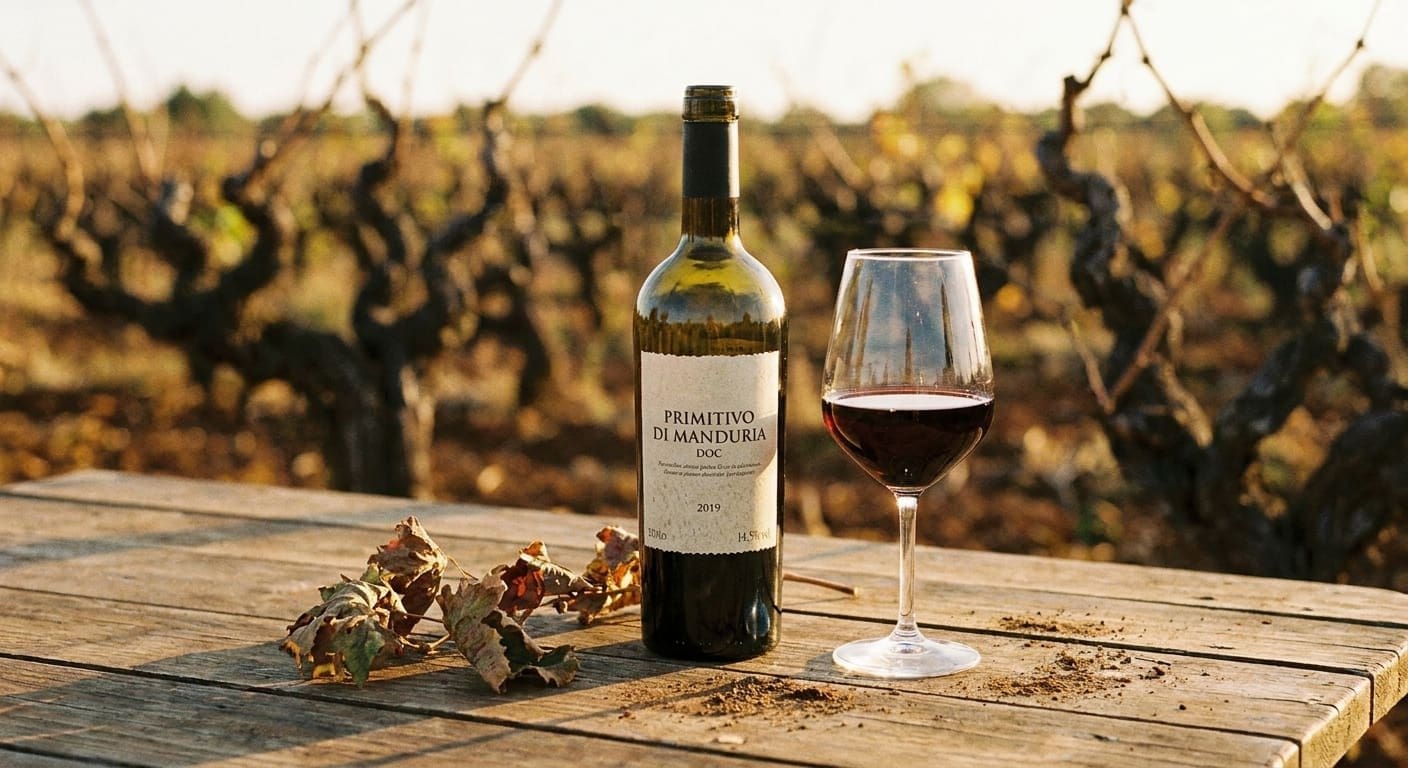
Most wine drinkers think Primitivo is just one wine. It is not. It is a stack of seven different denominations, each with its own grape minimums, alcohol floors, aging mandates, and release dates. The difference between a standard Primitivo di Manduria and a Manduria Riserva is not marketing. It is law.
I have walked the terra rossa vineyards of Manduria and the white limestone uplands of Gioia del Colle. I have sat at the table with producers like Cantele and Tenute Rubino on our VIP Winery Vacations Puglia and Basilicata journey. This field guide is my curated atlas of the Primitivo denomination stack. It covers what every bottle label is actually telling you, if you know how to read it.
What Primitivo di Manduria Actually Means
Primitivo is Puglia’s early ripening, high sugar black grape. It was first isolated and named Primaticcia near Gioia del Colle around 1799. Genetically, it is identical to Croatian Crljenak Kastelanski and California Zinfandel. But in Puglia’s heat, it earned its Italian name. Primaticcia. The early one.
Today, Primitivo travels under seven different labels. Each one sets a different floor on composition, ripeness, and aging. From the DOCG dessert wine down to broad IGTs, the rules tighten or loosen in ways most wine drinkers never notice.
Primitivo di Manduria DOC is the flagship. At least 85 percent Primitivo grapes. The rest can be non aromatic black grapes approved for Taranto or Brindisi. A nine ton per hectare grape cap. Minimum 13.00 percent natural alcohol at harvest, with 13.50 percent total alcohol at release. The wine can leave the cellar after March 31 of the year following harvest. No mandatory wood aging. This is the bottle most people recognize.
Primitivo di Manduria DOC Riserva takes everything the standard DOC requires and tightens it. Same grape composition. Same growing zone. Same yields. But the alcohol floor rises to 13.50 percent natural and 14.00 percent total. The wine must age 24 months starting November 1 of the harvest year, with at least 9 of those months in wood. It cannot be released until two years from March 31 following harvest. And screw caps are not permitted. Only cork.
Primitivo di Manduria Dolce Naturale DOCG is Puglia’s only DOCG inside this constellation. One hundred percent Primitivo. Only the first fruiting clusters are allowed, and they must undergo natural appassimento, drying on the vine or after harvest to concentrate sugars. Minimum 16 percent natural alcohol. At least 50 grams per liter of residual sugar. Releasable from June 1 of the year after harvest. This is a dessert wine, but it carries the highest regulatory burden in the entire stack.
The same grape changes identity as altitude, soils, and yield rules shift.
Gioia del Colle DOC Primitivo is the historical cradle. One hundred percent Primitivo from the Murgia plateau in Bari province. Minimum 13.50 percent natural alcohol. An 80 quintal per hectare grape cap with 65 percent wine yield. These are limestone uplands at 300 to 480 meters, with cooler nights than Manduria and longer hang time. The resulting wines carry brighter acidity and more restraint.
Gioia del Colle DOC Primitivo Riserva requires minimum two years aging from November 1 of the production year. Minimum 14.00 percent natural alcohol. No specific wood requirement is extracted from the official catalogo viti. These are wines built on elevation and time, not barrel influence.
The IGT tier covers the broader Salento and Tarantino canvases.
Salento IGT Primitivo spans Brindisi, Lecce, and Taranto provinces. Minimum 85 percent Primitivo. A 17 ton per hectare grape cap. Minimum 12.00 percent natural alcohol. No mandatory aging or release date. This is where volume oriented Primitivo lives.
Tarantino IGT Primitivo narrows to Taranto province. Same 85 percent minimum. A looser 22 ton per hectare varietal grape cap. Minimum 11.50 percent natural alcohol. No mandatory aging.
Key Takeaway: Seven labels can say Primitivo. What separates them is not the region on the front. It is the alcohol minimums, aging mandates, and yield ceilings on the disciplinare.
The Fine Print: How to Read a Primitivo Label
When I walk tour guests through how to read an Italian wine label, I start with the alcohol, aging, and release rules. These legal thresholds separate a standard Primitivo di Manduria from a Manduria Riserva. They also separate a DOC from a DOCG and an IGT.
Here is the full Manduria DOC disciplinare, side by side, sourced directly from the official Regione Puglia disciplinare for Primitivo di Manduria DOC.
| Parameter | Manduria DOC | Manduria Riserva |
|---|---|---|
| Grape composition | Primitivo min. 85% | Primitivo min. 85% |
| Min. natural alcohol (grapes) | 13.00% vol | 13.50% vol |
| Min. total alcohol at release | 13.50% vol | 14.00% vol |
| Earliest release | After 31 March (year after harvest) | After two years from 31 March (year after harvest) |
| Minimum total aging | No mandatory period | 24 months from 1 November of harvest year |
| Aging in wood | No mandate | At least 9 months |
| Max grape yield | 9 t/ha | 9 t/ha |
| Max grape-to-wine yield | 70% | 70% |
| Chaptalization | Prohibited | Prohibited |
| Closure | Flush cork required; screw cap allowed up to 0.25L | Screw cap NOT permitted |
The disciplinari quote two different alcohol figures for a reason. Minimum natural alcohol is the potential alcohol of the grapes at harvest. It is a ripeness floor. The minimum total alcohol is what must be in the finished wine at release. The gap between them tells you how much the wine evolved in the cellar.
For the DOCG Dolce Naturale, the numbers jump. Minimum 16 percent natural alcohol, with 13 percent actually realized and at least 50 grams per liter residual sugar. The discipline requires first fruiting clusters only, which are then concentrated further by natural appassimento. This is not just a sweet wine. It is the most tightly regulated Primitivo in existence.
Gioia del Colle DOC sets its own thresholds. Minimum 13.50 percent natural alcohol. No specific wood aging mandate. The Riserva requires 24 months total aging but does not extract a specific wood requirement from the official catalogo viti scheda for Gioia del Colle DOC. The altitude does the structuring here, not the barrel.
Key Takeaway: The alcohol floor, aging mandate, and closure rule on a Primitivo label are legal facts, not marketing claims. Learn those three data points and you can read any Primitivo label like a somm.
Why Primitivo Gets So Big So Fast
The grape earned its name honestly. Primaticcia. The early one. Primitivo ripens unusually fast in Puglia’s heat. Its clusters also ripen unevenly. First fruiting clusters can hit 16 percent plus potential alcohol while later femminelle clusters remain green on the same vine.
The DOCG Dolce Naturale exploits this biology deliberately. Only the first pass clusters are allowed. Those clusters then undergo appassimento, which concentrates the sugars further. The result is a naturally sweet, high alcohol wine built from the plant’s own uneven ripening pattern.
For the dry wines, the uneven ripening creates a management challenge. Harvest too early and you sacrifice depth. Harvest too late and the alcohol runs away from the structure. The best producers in Manduria and Gioia del Colle navigate this window with precision that comes from generations on the same land.
This is also why Primitivo alcohol content varies so widely. A Salento IGT at 12 percent tells a very different story than a Manduria Riserva at 14.5 percent. Both can say Primitivo on the label. The alcohol number is the first clue about which tier you are holding.
Key Takeaway: Primitivo earned its name because it ripens fast. That uneven ripening is what the DOCG exploits, what the dry wine producers manage, and what you should look for on the label.
Coastal Terra Rossa vs. Limestone Murgia
Two terroirs. Two completely different Primitivos.
Manduria sits on the hot Ionian plain. The vines root deep into iron stained terra rossa over fractured limestone. Many are trained as bush vine alberello, the traditional low goblet shape that protects grapes from wind and sun. The wines lean ripe, opulent, saline fruited. Black cherry confit. Fig. Sea breeze. The heat builds power. The iron rich soil builds depth.
Gioia del Colle climbs onto the Murgia plateau at 300 to 480 meters. White limestone. Cooler nights. Longer hang time. The same grape grown here produces a wine with brighter acidity, more restraint, and a mineral edge that the Manduria expression does not chase. This is Primitivo that breathes.
I have walked both zones. In Manduria, the heat hits you the moment you step out of the car. The vines look ancient, twisted into alberello shapes, and the soil crunches red underfoot. In Gioia del Colle, there is a breeze even in August. The limestone reflects light. The grapes hang longer, develop slower, and taste different at harvest. The same grape. Two different planets.
Key Takeaway: Manduria Primitivo is built on power and salinity. Gioia del Colle Primitivo is built on elevation and acidity. Both are authentic. They simply speak different dialects.
When Can a Primitivo Leave the Cellar?
This is the question that reveals how well someone actually knows Italian wine law. Every Primitivo category has a legal release date. These are minimums set by the disciplinare. Reputable producers often hold their wines longer. Top Manduria Riserve frequently stay in the cellar five plus years beyond the legal minimum.
Using today as a reference, here is when each category of Primitivo can legally leave the cellar by vintage.
| Category | 2021 Vintage |
|---|---|
| Manduria DOC | April 2022 |
| Manduria DOC Riserva | April 2024 |
| Dolce Naturale DOCG | June 2022 |
| Gioia DOC Primitivo | No specific release date extracted from official disciplinare |
| Gioia DOC Primitivo Riserva | Nov 2023 |
Notice the pattern. A 2024 Manduria Riserva will not legally leave a cellar until April 2027. That is three years of waiting for the standard DOC’s one. The wood mandate inside the Riserva is nine months minimum, but the release window forces patience well beyond what the barrel alone requires.
When you see a bottle of Manduria Riserva on a shelf today, you are looking at a wine that has spent at least two years in the cellar and at least nine months of those in wood. That is the law. It is also the flavor.
Key Takeaway: A Primitivo vintage date plus the category tells you exactly when the wine could legally leave the cellar. If the math does not add up, the bottle should not exist.
How to Find the Good Stuff
Buying Primitivo well comes down to four signals.
First, check the category. DOC is the regulated floor. DOC Riserva is the regulated ceiling for dry wine. IGT is where volume lives. If the label says Salento IGT Primitivo, the grapes could come from anywhere across three provinces with a 17 ton per hectare cap and 12 percent alcohol minimum. That is not a bad bottle by default. It is just a bottle with a wider regulatory net.
Second, look for small family producers. The best Primitivo I have poured came from families who have farmed the same land for generations. These are the producers who hand harvest, train alberello vines, and hold Riserve well past the legal release date. You will not find them in supermarket stacks. You will find them on restaurant lists like the Libation Library at Aroma Thyme Bistro and on our VIP Winery Vacations Puglia and Basilicata journey.
Third, pay attention to the closure. A Manduria Riserva with a screw cap is not a Riserva. The disciplinare prohibits it. If you see a screw cap on a bottle labeled Riserva, walk away.
Fourth, use the vintage release simulator above. If you are holding a 2023 Manduria Riserva in early 2026, that bottle cannot legally exist yet. The math is simple and the disciplinare is clear. No exceptions.
Key Takeaway: The category label, the producer's legacy, the closure type, and the vintage math are your four tools for finding great Primitivo. Use all four. The label alone is not enough.
For the complete picture of what Puglia grows beyond Primitivo, I have written separate guides to the region’s lesser known white wine grapes and to Negroamaro, Primitivo’s darker, more structured sibling. Puglia is not a one grape region. It rewards curiosity.
Frequently Asked Questions
What is Primitivo di Manduria?
Primitivo di Manduria is the flagship dry DOC wine of Puglia. It requires at least 85 percent Primitivo grapes grown in designated communes across Taranto and Brindisi provinces. The wine must reach 13.00 percent natural alcohol and 13.50 percent total alcohol, with no mandatory wood aging.
What is the difference between Primitivo and Zinfandel?
They are genetically identical. DNA research has confirmed that Primitivo, Zinfandel, and Croatian Crljenak Kastelanski are the same grape. The difference is entirely regional. California Zinfandel ripens under a different climate, different soils, and different winemaking traditions. Same DNA. Completely different wine.
Is Primitivo di Manduria always dry?
Not quite. The standard DOC and Riserva are dry wines. The DOCG Dolce Naturale is a sweet dessert wine made from 100 percent Primitivo with first fruiting clusters and natural appassimento. Both categories exist under the same denomination stack. The label tells you which one you have.
What does Primitivo taste like?
It depends heavily on the denomination and the terroir. Manduria DOC Primitivo is typically ripe, opulent, and saline fruited, with notes of black cherry confit and fig. Gioia del Colle Primitivo shows brighter acidity, more restraint, and a distinct mineral backbone. A Salento IGT at 12 percent alcohol will taste very different from a Manduria Riserva at 14.5 percent.
What food pairs with Primitivo?
The wine’s natural richness and soft tannins make it a strong match for Puglia’s traditional cuisine. Orecchiette with braised meat ragù. Grilled lamb with bitter greens. Aged pecorino. For the Riserva, roasted game or slow cooked beef shin. The rule is simple. Match the weight of the wine to the weight of the dish. Primitivo carries enough body to stand up to food that lighter Italian reds cannot handle.
Can Primitivo age?
Yes, especially the Riserva. The DOC Riserva requires 24 months total aging with at least 9 months in wood before release. Top producers often hold their Riserve five plus years beyond that. A well stored 2018 Manduria Riserva opened today will show tertiary complexity that the standard DOC never develops.
The Bottom Line: Read the Label, Trust the Producer
Most wine drinkers never learn the difference between a DOC, a DOCG, and an IGT. They buy Primitivo the way they buy any other red. The grape name catches their eye. The price feels right. They take it home.
That works. But it misses the game being played.
The seven denominations of primitivo di manduria are not marketing tiers. They are legal documents. Each one carries specific grape minimums, alcohol floors, yield ceilings, aging mandates, and release dates that tell you exactly what is in the bottle before you pull the cork.
I built this Primitivo Atlas from the official disciplinari published by Regione Puglia and the MASAF catalogo viti. Every number in this guide traces to a legal text. Every release date, every alcohol threshold, every wood mandate. This is not opinion. This is law.
Once you know how to read it, a Primitivo label becomes a map. You can trace the wine back to a specific commune, a specific elevation, a specific set of rules. You know whether the bottle spent nine months in wood or none at all. You know whether it could legally leave the cellar last year or will not be released until 2027.
That is the difference between buying wine and understanding it.
About the Author. Chef Marcus Guiliano is the chef owner of Aroma Thyme Bistro in New York's Hudson Valley, co founder of VIP Winery Vacations, and a Michelin three star trained chef who has visited more than 400 vineyards across six countries. His Libation Library at Aroma Thyme holds more than 800 selections from small independent producers worldwide, including a deep bench of Puglian wines. Every regulatory figure in this guide traces to an official disciplinare published by Regione Puglia or the MASAF catalogo viti.
Explore the Puglia and Basilicata journey | Visit Aroma Thyme Bistro
Inspired to travel deeper?
Explore the private wine, food, and producer-led journeys behind the stories on VIP Winery Vacations.
View Valle


